
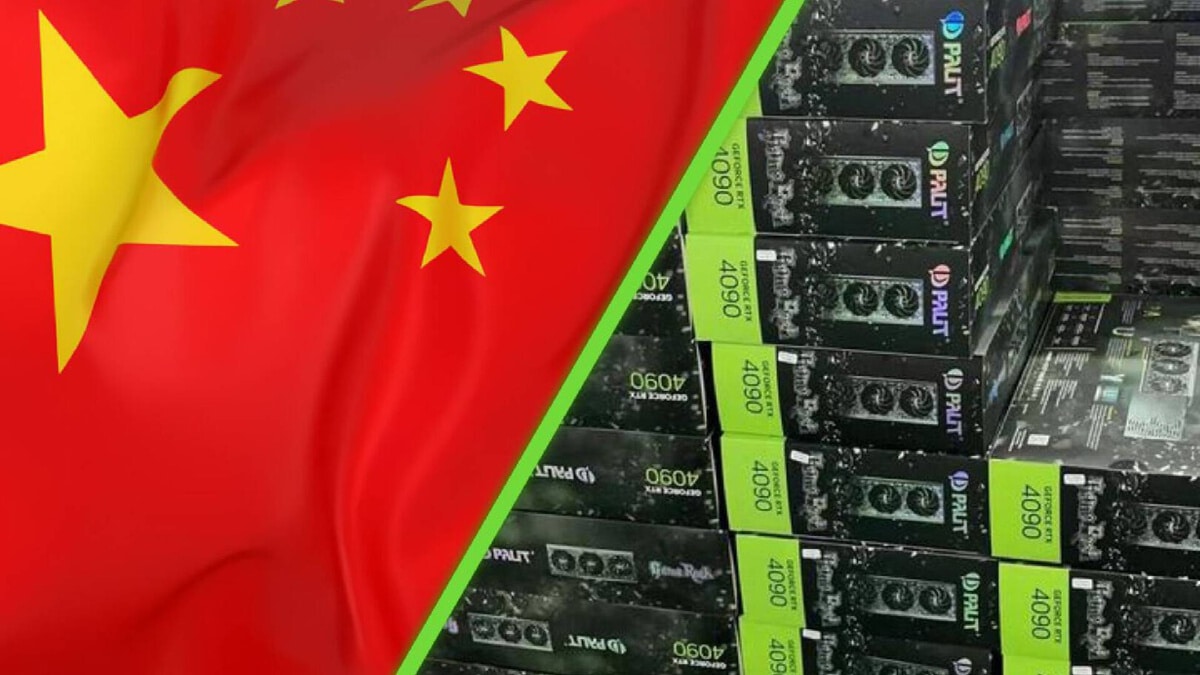
The ongoing trade tensions between the United States and China have taken an unexpected twist. In a bold move to advance its artificial intelligence capabilities despite stringent U.S. export restrictions, China is reportedly dismantling high-end Nvidia graphics cards to repurpose their valuable chips. This development underscores not only the escalating tech rivalry between the two nations but also the critical importance of GPUs in the global AI race.
He thought he was rescuing a sheep—but it turned out to be something else
This bizarre French customer habit is driving shop owners crazy
GPUs: The Indispensable Engines of Artificial Intelligence
In today’s technology landscape, Graphics Processing Units (GPUs) have become the backbone of artificial intelligence and machine learning applications. These powerful processors excel at handling the complex mathematical computations required for training AI models. Nvidia, a leading American company, dominates this market with its advanced GPUs, making it a focal point in the U.S.-China trade dispute.
The U.S. government, aiming to curb China’s rapid advancements in AI, has imposed strict export controls on high-performance GPUs. These regulations restrict the sale of cutting-edge Nvidia GPUs to China, citing national security concerns. As someone who has dabbled in machine learning projects, I can attest to how essential these GPUs are for training models efficiently. Without access to the latest hardware, progress can slow to a crawl.
In an attempt to comply with U.S. regulations while maintaining its business interests, Nvidia introduced a modified version of its flagship RTX 4090 graphics card for the Chinese market. Known as the RTX 4090D, this model is approximately 5% less powerful than its international counterpart but adheres to export limitations. Despite the slight downgrade, the RTX 4090D remains one of the most potent GPUs legally available in China, making it highly coveted among Chinese tech companies.
China’s GPU Crisis: Unconventional Solutions Emerge
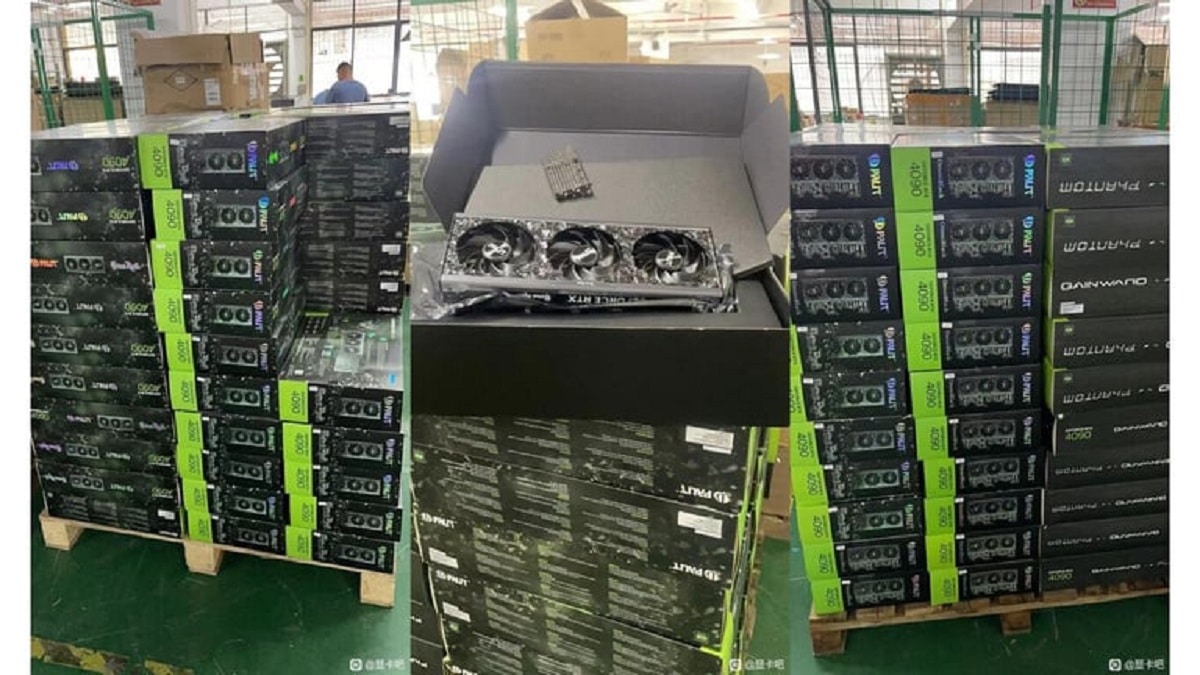
Faced with these restrictions, Chinese companies have devised creative, albeit unorthodox, methods to acquire the necessary hardware for their AI ambitions. According to reports from the Financial Times, businesses are purchasing Nvidia GPUs en masse and stripping them down to extract the crucial chips inside. In December alone, one facility reportedly dismantled over 4,000 Nvidia graphics cards.
These reclaimed chips are then repurposed to power AI research and development across the country. The spectrum of buyers ranges from government-affiliated organizations to small AI startups. Charlie Chai, an analyst at 86Research, views this trend as a clear sign of China’s determination—and desperation—to secure advanced technology. “It’s a workaround to bridge the hardware gap imposed by export controls,” he explains.
I recently stumbled upon images circulating on Chinese tech forums like Baidu, showcasing towering stacks of Nvidia RTX 4090 boxes awaiting disassembly. It’s a striking visual that highlights the lengths to which companies are willing to go. Imagine the irony of top-tier graphics cards, designed for gaming and professional graphics work, being reduced to their core components in a quest to fuel AI innovation.
Doubling Down on Domestic Development
While these stopgap measures address immediate needs, China is also accelerating efforts to reduce its dependency on foreign technology. The government has ramped up support for domestic semiconductor manufacturers, investing heavily in research and development to produce homegrown chips capable of rivaling those from Nvidia and other international players.
This initiative isn’t just about overcoming current restrictions; it’s a strategic move to bolster China’s long-term technological independence. Similar to how the nation advanced its space program—eventually landing a rover on the far side of the moon—China aims to become a self-sufficient leader in AI technology.
The Global Implications of a Tech Tug-of-War
The disassembly of Nvidia GPUs in China is more than a tale of tech ingenuity; it’s a reflection of the broader geopolitical struggle over technological supremacy. As the U.S. continues to tighten export controls, China’s resourcefulness in sidestepping these barriers highlights the complexities of enforcing such policies in a globally connected economy.
This situation raises important questions: Will these measures significantly hinder China’s AI development, or will they merely prompt alternative approaches that could accelerate its technological evolution? Moreover, how might this affect global collaboration in AI research, which has historically benefited from cross-border exchange of ideas and resources?
A Determined Pursuit of Innovation
China’s actions signal a clear message: limitations imposed by trade disputes will not deter its pursuit of AI excellence. By stripping down Nvidia GPUs and investing in domestic chip production, the country demonstrates both immediate adaptability and long-term strategic planning.
For those of us watching from the sidelines, it’s a fascinating case study in how nations navigate the intricate dance of competition and cooperation in technology. It also serves as a reminder of the pivotal role that hardware plays in powering the software innovations we often take for granted.
As the technological tug-of-war between the U.S. and China continues, the world will be keenly observing the outcomes. One thing is certain: the race for AI supremacy is heating up, and the strategies employed today will shape the technological landscape of tomorrow.
Similar Posts
- How Nvidia’s H20 chip became the new battleground in the AI race with China
- How China silently caught up in chip tech while the US watched in disbelief ?
- U.S. Anger Spirals Out of Control: Huawei Strikes Again with Laptops Powered by Intel
- Taiwan bets on AI to shake up global chip production like never before
- China’s new engine could circle the globe in just 2 hours—20,000 km/h breakthrough

Felix Marlowe manages Belles and Gals’ vibrant social media platforms. With expertise in social engagement and viral marketing, Felix creates content that sparks conversation and keeps followers coming back for more. From celebrity news to trending challenges, Felix makes sure our social media stays at the forefront of pop culture.


