
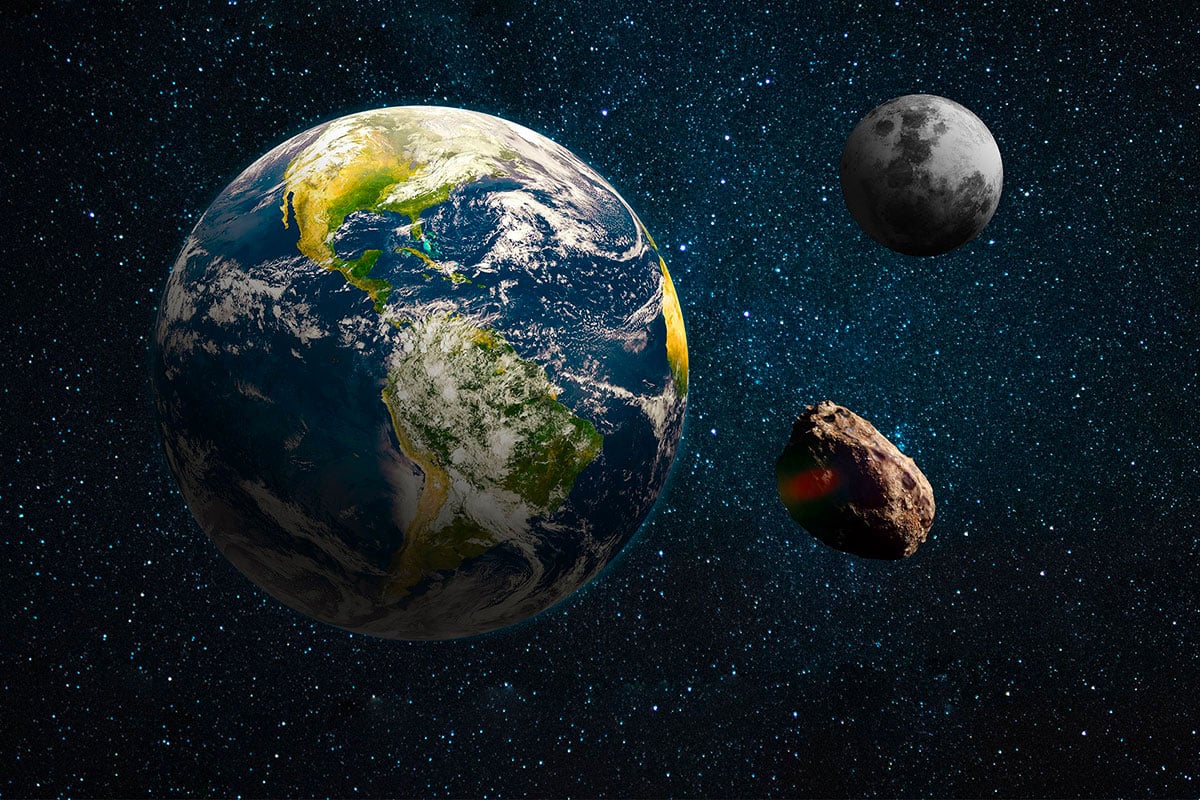
I still remember the evening I was camping under a clear autumn sky when my phone buzzed with startling news: Earth had just captured a tiny asteroid, turning it into a fleeting second satellite. While roasting marshmallows, I glanced up at our familiar Moon and wondered how it felt to have such a miniature companion tagging along through space.
He thought he was rescuing a sheep—but it turned out to be something else
This bizarre French customer habit is driving shop owners crazy
A New Temporary “Moon”
On September 29, 2024, Earth’s gravity caught hold of a small near‑Earth asteroid named 2024 PT5, pulling it into a brief orbit rather than letting it sail past into the void. This tiny rock—barely 10 meters across—won’t complete a full lap around our planet. Instead, it will hang near us until November 25, 2024, before slipping back onto its solar trajectory.
The Science Behind Earth’s “Mini‑Moon”
Though such captures sound exotic, they’re not as rare as one might think. According to astronomers, our planet snags small asteroids every few years, but they’re so faint that only our latest survey tools spot them in time. Even NASA’s Jet Propulsion Laboratory notes that 2024 PT5 is “not quite a mini‑moon”—it never settles into a stable orbit like our familiar Moon—yet it offers a prime chance to study how gravity tugs at passing rocks. Intriguingly, spectral data suggest 2024 PT5 may hail from the Arjuna asteroid belt, a loose collection of space pebbles whose orbits brush close to Earth’s path around the Sun.
The Brief But Important Stay of 2024 PT5
At just the size of a school bus, 2024 PT5 is far too dim for backyard telescopes. To catch even a fleeting glimpse, observers need a research‑grade scope—at least 30 inches in diameter—equipped with digital detectors to trace its swift journey across the sky. I recall swapping notes with a colleague at a stargazing meetup: despite their excitement, most amateurs simply can’t track these cosmic window shoppers without specialized gear.
The Broader Implications for Space Exploration
Mini‑moons like 2024 PT5 serve as natural laboratories for testing concepts in asteroid composition and mission planning. The tight timeline—from detection to departure—poses a real challenge for any proposed asteroid‑mining or sample‑return mission. Yet each temporary visitor brings us closer to understanding how to harness asteroidal resources or refine rendezvous technologies for future crewed voyages.
A Cosmic Reminder of the Unseen Forces Around Us
Though 2024 PT5’s visit will end in a matter of weeks, its presence underscores the ever‑shifting dance of celestial bodies around our planet. Even the smallest near‑Earth objects can illuminate the mechanics of gravity, the origins of our solar system, and the potential to explore beyond our lunar neighbor. So next time you gaze at the night sky, remember there’s more to our cosmic backyard than meets the eye—and that Earth’s newest “moon” is out there, just beyond our familiar glow.
Similar Posts
- Earth officially has a second moon now
- NASA issues chilling warning: life on Earth won’t be possible after this date
- China Fires Precision Laser at the Moon in Daylight, Achieving Historic Deep-Space Milestone
- Earth receives a mysterious laser message from 16 million kilometers away
- NASA Sounds the Alarm: Unknown Forces Beneath Earth Spark Global Anomaly

Felix Marlowe manages Belles and Gals’ vibrant social media platforms. With expertise in social engagement and viral marketing, Felix creates content that sparks conversation and keeps followers coming back for more. From celebrity news to trending challenges, Felix makes sure our social media stays at the forefront of pop culture.


