
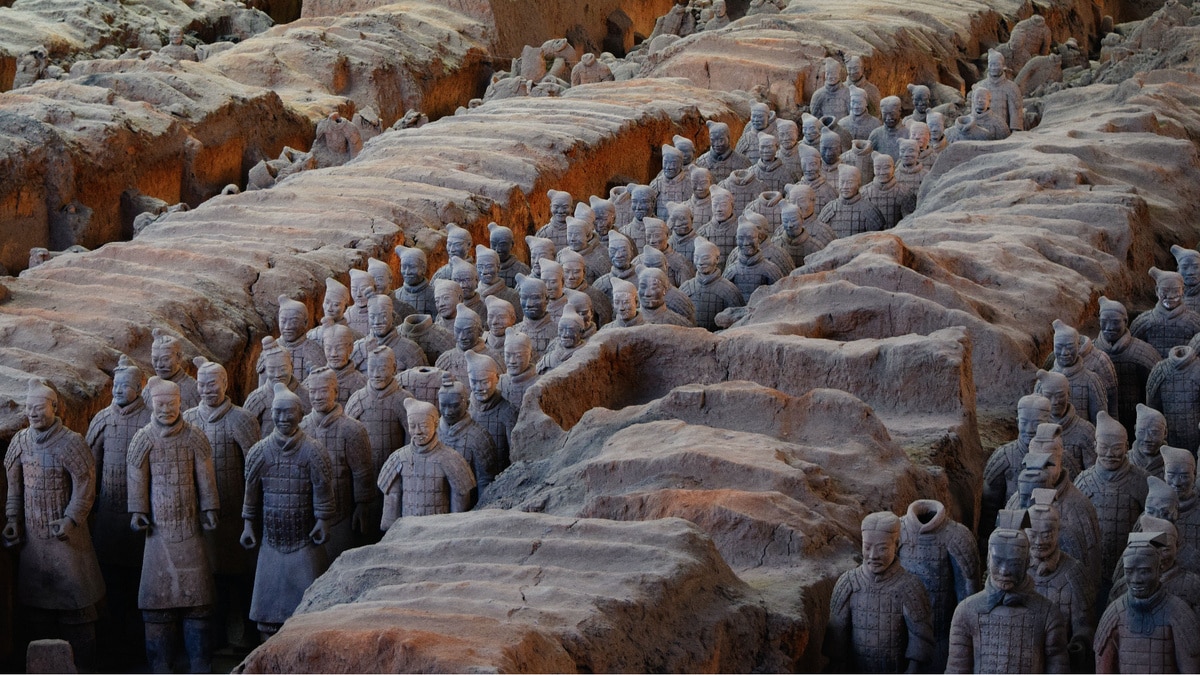
It’s the kind of story that feels made for an Indiana Jones film: an ancient tomb, guarded by thousands of silent warriors, rumoured to hold untold treasures—and possibly lethal traps. But unlike the silver screen, what’s stopping archaeologists from entering the tomb of China’s first emperor, Qin Shi Huang, isn’t superstition. It’s cold, hard reality.
He thought he was rescuing a sheep—but it turned out to be something else
This bizarre French customer habit is driving shop owners crazy
Despite being one of the most significant archaeological sites on the planet, the mausoleum remains sealed, more than two millennia after the emperor was buried in 210 BCE. The reasons for this are far from mythical—but they are every bit as fascinating.
A vast and delicate underground kingdom
Let’s start with scale. Qin Shi Huang wasn’t a man of half-measures. As the ruler who unified China, established a common currency and writing system, and laid the groundwork for the Great Wall, he wanted a legacy as grand as his rule.
So he built one: an underground necropolis sprawling over 56 square kilometres, complete with more than 8,000 life-sized terracotta soldiers, horses, and chariots. Each warrior is unique, a silent sentinel meant to guard the emperor in the afterlife.
And somewhere beneath this elaborate city lies the sealed tomb itself—rumoured to contain rivers of liquid mercury, traps worthy of ancient legends, and possibly, invaluable historical artefacts.
Mercury, myths and structural risks
The biggest red flag? Mercury contamination. Ancient texts speak of flowing mercury rivers inside the tomb, and modern surveys have picked up unusually high levels of the toxic metal in the soil. Experts worry that breaching the tomb could release dangerous vapours, posing serious health risks to anyone involved—and potentially disturbing a delicate internal environment.
Then there’s the issue of booby traps. Some researchers believe ancient engineers may have rigged the tomb to protect it from looters. Even if such mechanisms have long since rusted away, the fear of triggering structural collapse is real. One wrong move could destabilise the chamber, destroying anything inside and making further study impossible.
Add to that the uncertainty of what lies behind the sealed entrance—fragile texts, delicate artefacts, or nothing at all—and the decision to wait suddenly seems more wise than mysterious.
Technology offers a new path in
So, how do you explore a tomb you can’t touch? The answer, increasingly, lies in non-invasive technology. Tools like ground-penetrating radar and 3D imaging have already been used in Egyptian tombs to detect hidden chambers without digging a single trench.
One particularly exciting method is muon tomography, which uses cosmic particles to create detailed internal maps of dense structures—kind of like a supercharged X-ray. It can reveal voids, layouts, and even material differences without laying a finger on the site.
The challenge? Gaining permission. For now, Chinese authorities have opted to preserve the tomb as-is, prioritising conservation over curiosity. Until that changes, scientists can only prepare and wait for the green light to begin virtual exploration.
Waiting for the right moment
For archaeologists, the tomb of Qin Shi Huang represents the ultimate puzzle—massive, mysterious, and loaded with historical significance. But with great promise comes even greater responsibility. After all, the world has seen too many irreplaceable relics lost to premature excavation.
So, rather than cracking open the tomb like a piñata, today’s researchers are taking the cautious route. They know that sometimes, in archaeology, waiting is the most respectful act of all.
Similar Posts
- Bronze Age Fortress Found in the Mountains Leaves Archaeologists Speechless
- Taylor Swift’s Ancient Coin Jewelry: Unraveling the Symbolic Meanings!
- Archaeologists Uncover Surprising Find in Hittite Tablets
- Taylor Swift’s Eras Tour Wrap Party Photos with Travis Kelce & the Mahomeses – See Them Here!
- Satellite images reveal China is quietly building the largest military complex on Earth

Felix Marlowe manages Belles and Gals’ vibrant social media platforms. With expertise in social engagement and viral marketing, Felix creates content that sparks conversation and keeps followers coming back for more. From celebrity news to trending challenges, Felix makes sure our social media stays at the forefront of pop culture.


