
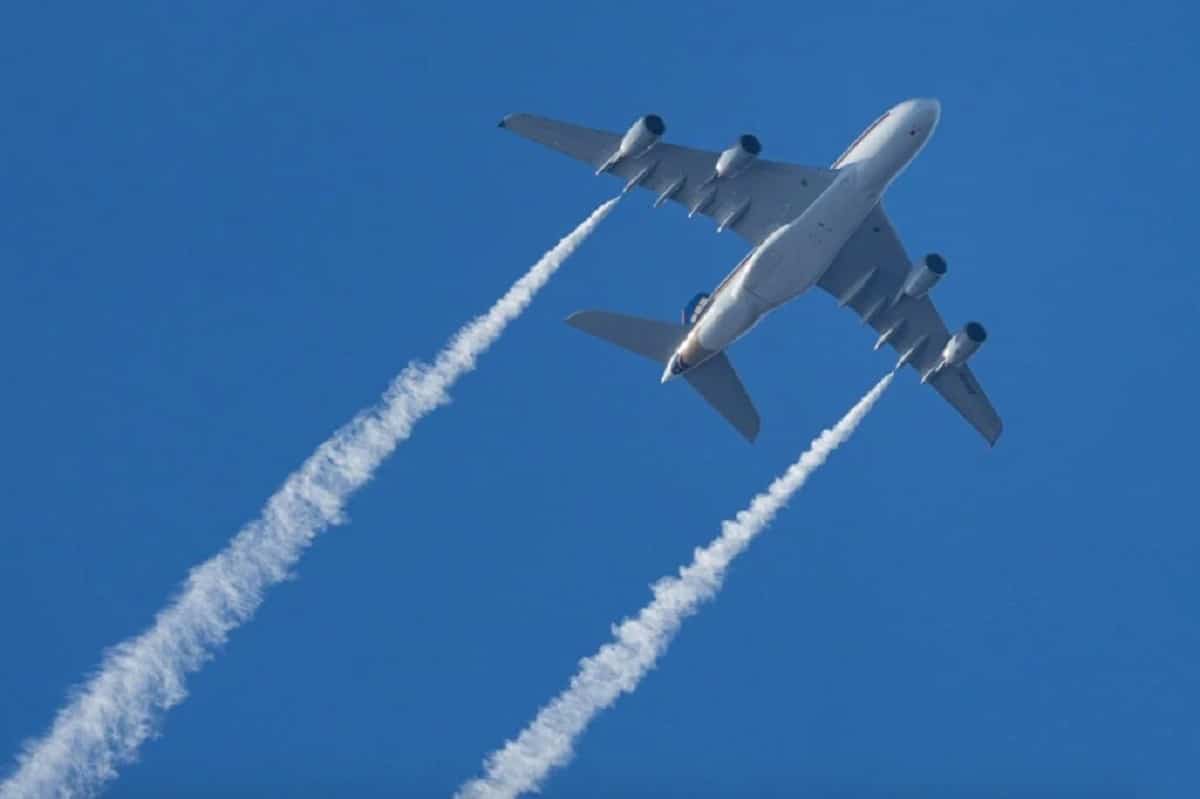
On Thursday, November 24, Singapore Airlines Flight SQ317, traveling from London to Singapore, was forced to make an emergency landing after a critical in-flight issue. The Airbus A380, one of the largest commercial aircraft in the world, was diverted to Frankfurt, Germany, after a rapid descent and a fuel dump. Hundreds of passengers, who initially boarded the plane in the UK, found themselves unexpectedly heading to a new destination, with no clear understanding of the unfolding emergency.
He thought he was rescuing a sheep—but it turned out to be something else
This bizarre French customer habit is driving shop owners crazy
A Rapid Descent and Unsettling Situation
Flight data from the tracking platform FlightRadar24 shows the extent of the emergency. The Airbus A380, which had reached an altitude of 32,000 feet, suddenly descended to a much lower 9,000 feet. This dramatic drop in altitude was necessary due to a pressurization issue that compromised the safety of everyone on board. At these lower levels, the aircraft could ensure a safer environment for the passengers and crew, with adequate oxygen levels and atmospheric pressure to maintain safety.
The situation wasn’t just stressful for those on board—it also required the aircraft to make some difficult operational decisions, one of which was to jettison fuel.
The Fuel Dump: A Safety Measure
In situations like these, it’s not uncommon for aircraft to dump fuel—a procedure that, while dramatic, is essential for the safe landing of the aircraft. The Airbus A380 was carrying a substantial amount of fuel, enough for a long-haul journey across Europe, the Middle East, and the Indian Ocean. In order to make a safe emergency landing, the aircraft needed to reduce its weight. The fuel was released to ensure that the landing gear wouldn’t be overwhelmed by too much weight, and that the aircraft could land at a lower speed while still maintaining sufficient lift.
Aeronautical spotters were quick to capture the moment, and images of the fuel discharge spread quickly on social media. What the public may not always realize, however, is that this practice is not only legal but also an important safety protocol designed to protect everyone on board.
Fuel Dumping: A Controversial But Necessary Procedure
Fuel dumping is one of the more controversial aspects of aviation safety. While the sight of fuel being released into the air can be unsettling, it is an action that can make the difference between a safe emergency landing and a catastrophic one. In fact, the procedure is tightly regulated by aviation authorities. The DGAC (French Civil Aviation Authority), for example, requires that the fuel dump occur at an altitude of at least 2,000 meters (around 6,500 feet), ensuring that the majority of the fuel evaporates before reaching the ground.
Aviation experts argue that this is a vital safety measure, as reducing the aircraft’s weight is crucial in maintaining control during the emergency landing. While fuel dumps are most often performed over uninhabited areas, the practice has been the subject of public outcry in some cases. For instance, in 2016, an Air France aircraft was forced to dump fuel over the Fontainebleau forest after an emergency caused by a motor issue. The mayor of Fontainebleau at the time, Frédéric Valletoux, publicly criticized the procedure, calling it “scandalous” that such operations were still allowed over protected, ecologically sensitive areas.
In response, the DGAC reiterated that the practice is carried out under strict guidelines to ensure safety and minimize environmental impact. According to their regulations, 90% of the fuel evaporates before it touches the ground, making the risk to the environment significantly lower. Still, the operation remains controversial, especially in areas with high human or ecological value.
https://twitter.com/i/status/1595771407262420994
A Necessary Trade-off for Passenger Safety
While the visual impact of a fuel dump is often dramatic, it’s crucial to understand that the procedure is a safety measure, not an act of recklessness. The flight crew of SQ317 made the right decision to prioritize the safety of the passengers by ensuring the aircraft could land safely despite the serious pressurization failure.
In the case of Flight SQ317, the decision to land in Frankfurt was one that ultimately allowed for a safe resolution to a potentially dangerous situation. For passengers, the uncertainty of the emergency landing likely turned their journey into a stressful and confusing experience. But as with most aviation emergencies, the training and quick thinking of the crew ensured that everyone aboard was kept out of harm’s way.
Understanding the Bigger Picture
Incidents like this highlight the complexities of modern air travel. While many passengers take for granted the ease and comfort of flying, these emergencies serve as a reminder of the significant technical challenges involved in aviation. From pressurization systems to fuel management, the safety protocols in place are designed to mitigate risks and ensure the best possible outcome when things go wrong.
For now, the Airbus A380 of Singapore Airlines has returned to service after the emergency landing, and the passengers who experienced this rare situation can hopefully look back on it with relief, knowing that their safety was the priority.
As aviation technology continues to improve, procedures like fuel dumping, while still controversial, remain an essential part of the toolkit that pilots and aviation authorities use to ensure passenger safety in the air.
Similar Posts
- Plane Returns to Gate After Passenger Mistakenly Calls Flight Attendant a ‘Waiter’
- After complaining about her seat “between two obese people” on a plane, a passenger receives compensation
- China’s new engine could circle the globe in just 2 hours—20,000 km/h breakthrough
- Woman Receives Compensation After Complaining About Being Seated Between Two Overweight Passengers on a Plane
- Unlimited Flights for Just $500 a Year: What’s the Catch Behind This Tempting Offer?

Felix Marlowe manages Belles and Gals’ vibrant social media platforms. With expertise in social engagement and viral marketing, Felix creates content that sparks conversation and keeps followers coming back for more. From celebrity news to trending challenges, Felix makes sure our social media stays at the forefront of pop culture.


