

You might think of Earth’s continents as fairly static—countries neatly slotted into place like pieces of a giant jigsaw. But that’s only true if you zoom in on time. Give it a few hundred million years, and the picture starts to shift. Literally.
He thought he was rescuing a sheep—but it turned out to be something else
This bizarre French customer habit is driving shop owners crazy
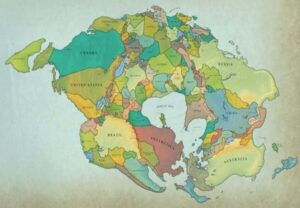
According to scientists who spend their careers watching rocks move at glacial speeds (and we mean that in the most respectful way), Earth is on track for yet another grand reshuffle. They’ve named the future configuration Pangaea Ultima—a fittingly dramatic title for what might be Earth’s final supercontinent.
So, what’s going to happen? In a nutshell: the Atlantic Ocean will vanish, Africa will head north like it’s chasing the sun, and everything will bunch up in one colossal landmass. If you’re picturing tectonic plates slow-dancing their way into a pile-up, you’re not far off.
France’s new neighbours might surprise you
Now, if you’re reading this somewhere in France, here’s the juicy bit: you might be one of the lucky ones. Not lottery-winning lucky, but “might-not-boil-to-death” lucky.
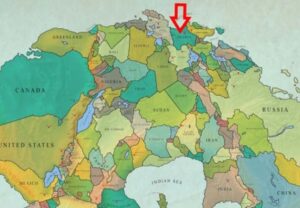
In this new Earth map, France could end up nestled near the North Pole, rubbing shoulders not just with Spain and Italy, but potentially Morocco, Algeria and Tunisia too. Picture ordering a baguette while gazing across a much-diminished Mediterranean—or what’s left of it, as that iconic sea is expected to disappear entirely. Geological time travel, anyone?
It’s not just France that’s playing musical chairs. Cuba could end up fused to the southern tip of the United States, Korea sandwiched between China and Japan, and Greenland inching closer to Canada like an introvert at a party. It’s a total rethink of our current world map—with no passport required.
A scorched Earth in the making?
Before you pack your bags for a polar-adjacent Provence, a word of caution: the climate of Pangaea Ultima doesn’t sound terribly welcoming. In fact, a recent study published in Nature paints a pretty grim picture.
This massive land merger would likely trigger widespread volcanic activity (because crashing continents is messy business), and that could double today’s CO₂ levels. Add a sun that’s slightly more luminous than it is now—around 2.5% brighter—and you’re looking at a global sauna, with temperatures exceeding 40°C across much of the landmass.
That’s not just uncomfortable. It’s life-threatening. Researchers believe such extreme heat could lead to the mass extinction of mammals, unable to cope with the relentless oven-like conditions. A sort of prehistoric déjà vu, only this time, we’re the ones potentially on the endangered list.
Heading north to stay cool
So where’s safe in this sizzling supercontinent? Scientists reckon the high-latitude zones—places currently flirting with the Arctic Circle—might offer a bit of relief. Cooler temperatures, more stable access to water, and just enough habitability to cling on.
That could make future France (and yes, possibly the UK, Portugal and bits of North Africa) one of the last refuges for life as we know it. A silver lining, albeit a rather toasty one.
A forever-changing planet
If this all sounds wildly dramatic, remember: it’s happened before. The original Pangaea broke up around 200 million years ago, and Earth has been playing continental dominoes ever since. Whether it’s Aurica, Amasia, or Novopangaea, all predictive models point in the same direction—constant change.
In the grand timeline of the Earth, the shape of our continents is just a phase. A blip. Something to be marvelled at over breakfast with your morning coffee—ideally with a side of nuts, if you’re keen on boosting your memory for all this fascinating geology.
Similar Posts
- Massive Rift in Africa Signals the Birth of a New Ocean Sooner Than Expected
- NASA issues chilling warning: life on Earth won’t be possible after this date
- NASA warns of mysterious anomaly spreading under Earth’s surface—here’s what they’ve found
- NASA confirms China’s giant water project could slow Earth’s rotation and disrupt global timekeeping
- Astronomers reveal a space water reservoir 140,000 trillion times larger than Earth’s

Felix Marlowe manages Belles and Gals’ vibrant social media platforms. With expertise in social engagement and viral marketing, Felix creates content that sparks conversation and keeps followers coming back for more. From celebrity news to trending challenges, Felix makes sure our social media stays at the forefront of pop culture.


