
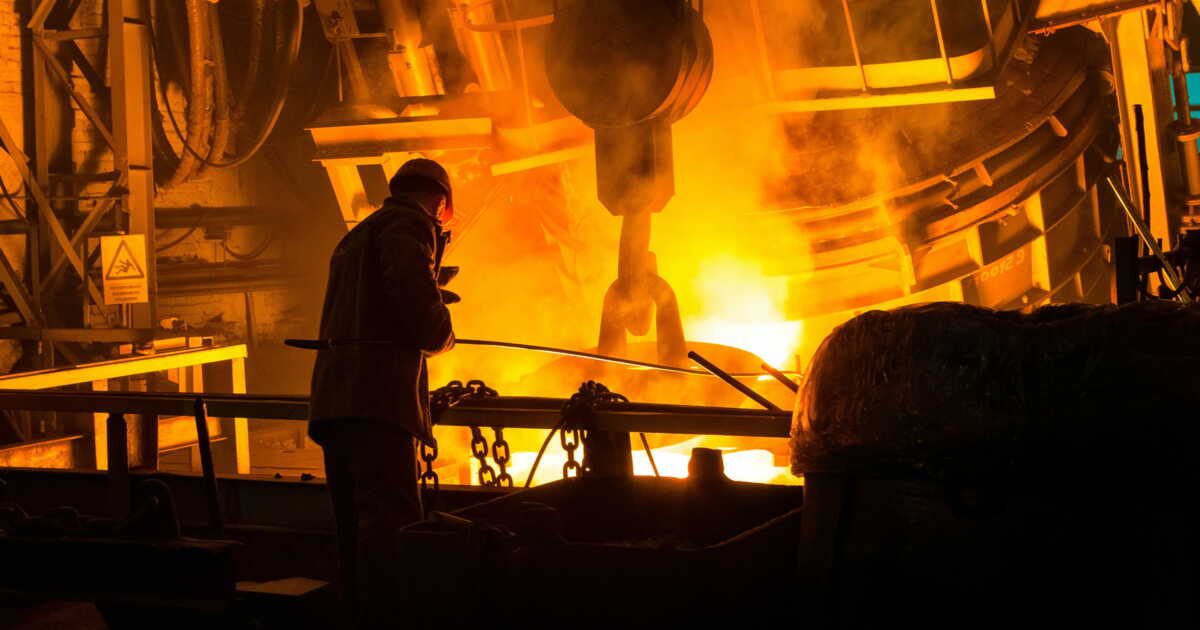
It’s not every day that a decades-old industrial process gets completely reimagined—but that’s exactly what a team of Chinese researchers has achieved. After ten years of relentless work, scientists have unveiled a new steelmaking method that’s turning heads across the globe for one stunning reason: it’s 3,600 times faster than the traditional approach.
He thought he was rescuing a sheep—but it turned out to be something else
This bizarre French customer habit is driving shop owners crazy
Steel might not sound like the sexiest subject, but it’s the backbone of nearly everything—cars, buildings, trains, wind turbines. And for as long as most of us can remember, it’s been produced using a highly energy-intensive process involving iron ore, scorching furnaces, and, crucially, a lot of coal. Until now.
From hours to seconds—how it works
Professor Zhang Wenhai, who led the project, says the innovation is nothing short of revolutionary. His team’s technique can create steel in as little as six seconds, a dramatic leap from the five to six hours normally required in blast furnaces.
The secret? A finely-tuned chemical reaction. Engineers inject ultrafine iron ore powder into a superheated furnace using a vortex lance, triggering what they describe as an “explosive” reaction. This produces searing droplets of pure, molten iron that collect at the bottom—ready to be turned into steel almost instantly by adding pure oxygen.
This process doesn’t just save time. It’s also designed to work with low-grade iron ore, something China has in abundance but has historically underutilised in favour of high-grade imports from Australia, Brazil and parts of Africa.
A game-changer for industry—and the planet
If adopted on a wide scale, this new method could drastically reduce China’s dependence on imported resources. But that’s not the only upside. Perhaps even more significantly, it could slash the carbon footprint of steelmaking.
By eliminating the use of coke—a processed coal product traditionally used in steel production—Professor Zhang estimates the method could reduce the energy cost of steelmaking by up to a third. That’s not just a win for factory budgets, but a big step towards China’s climate goals, particularly its ambition to hit peak carbon emissions before 2030.
Given that China is the world’s largest steel producer, any shift in how it manufactures the metal could have ripple effects far beyond its borders. A faster, cleaner production method would not only increase its industrial competitiveness but also boost the global appeal of low-emission steel exports—a major asset in an increasingly climate-conscious marketplace.
The global steel race just got a new leader
This development isn’t just about technological pride—it’s a bold move in the race for industrial innovation. With applications in everything from electric vehicles to urban infrastructure, a more efficient steel supply chain could give China an even sharper edge in key sectors.
While it’s too early to predict exactly how fast this method will scale, the implications are clear: faster production, cleaner output, and a powerful new tool for economic and environmental strategy.
For an industry known more for brute force than breakthroughs, this is a rare moment of scientific elegance—where a solution meets the scale of the challenge.
Similar Posts
- China claims impossible tech feat with stainless steel and clever engineering
- Stop Food from Sticking to Stainless Steel Pans with This Simple Trick!
- Top Chefs Agree: This Simple Trick Keeps Your Knives Razor-Sharp!
- How to Curl Your Hair with a Straightener? Try This Easy Trick!
- China’s Robot Mall is revolutionizing the way humanoid robots are sold

Felix Marlowe manages Belles and Gals’ vibrant social media platforms. With expertise in social engagement and viral marketing, Felix creates content that sparks conversation and keeps followers coming back for more. From celebrity news to trending challenges, Felix makes sure our social media stays at the forefront of pop culture.


