He thought he was rescuing a sheep—but it turned out to be something else
This bizarre French customer habit is driving shop owners crazy
Do your foods consistently stick to your stainless steel pan? Perhaps you’re just missing the right technique…
Over the past few decades, non-stick pans have frequently made headlines. Their undeniable convenience has not been enough to silence the controversies surrounding the composition of their coatings. Was the ban on PFOA in Europe in 2020, which were long used in the production of Teflon, a real victory? Perhaps, when their replacements such as GenX can prove to be safe in front of the European Chemicals Agency, which currently lists them among “substances of very high concern”… Amidst ongoing uncertainties, the most health-conscious cooks prefer to switch to inert materials that do not release particles: cast iron, copper, and stainless steel.
What exactly is stainless steel? It is an alloy of iron and carbon, often combined with other elements to enhance its properties—like chromium, which provides better resistance to corrosion, and nickel, which withstands heat very well. Cookware made from 18/10 stainless steel, containing 18% chromium and 10% nickel, is highly recommended for its durability and reliability.
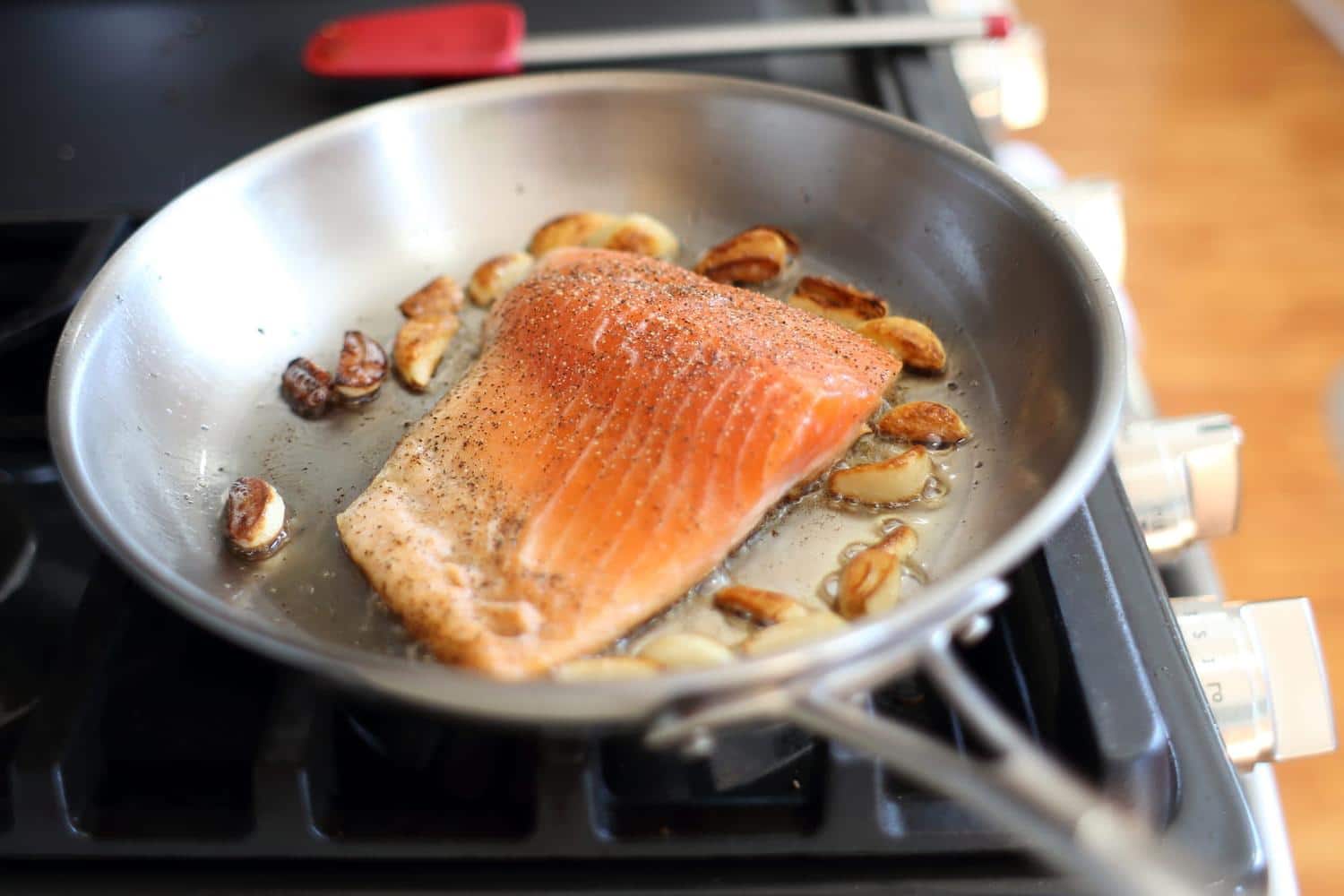
Despite its many advantages, stainless steel has one major drawback: its reputation as a “sticky pot” precedes it. You may have experienced this when trying to cook eggs or a fish fillet, which, despite a generous amount of oil, clung to the bottom as if glued there. This can turn your meal into scrambled eggs or shredded fish dish…
To prevent your food from sticking to your stainless steel pan, start by heating it empty by setting your burner to two-thirds of its maximum power (say 6 if it goes up to 9). Then, check if it’s hot enough by performing the water drop test: wet the tip of your fingers and flick water onto the pan. If the drops evaporate with a small sizzle, wait a bit longer. If they roll like beads, it’s time to add your food. But be careful! Lower the heat to just below half the maximum power (around 4, for our example). Then lightly oil your pan (lightly, we said!) and finally place your food in it.
Last caution: do not attempt to forcibly remove your food at the beginning of cooking. You should actually wait until they form a “crust” – thanks to the well-known Maillard reaction that chemists are familiar with – to easily flip them over. Patience is key!
Similar Posts
- Is IKEA’s $16.99 Stainless Steel Pan Worth It? Find Out Here!
- Top Chef Philippe Etchebest Warns Against This Trendy Cooking Tool!
- Best Skillet Choice: Easy In-Store Test You Must Try!
- Submit Your Recipes in May and Win a 3-Piece Mathon Excell’Inox Pan Set!
- China claims impossible tech feat with stainless steel and clever engineering

Felix Marlowe manages Belles and Gals’ vibrant social media platforms. With expertise in social engagement and viral marketing, Felix creates content that sparks conversation and keeps followers coming back for more. From celebrity news to trending challenges, Felix makes sure our social media stays at the forefront of pop culture.