
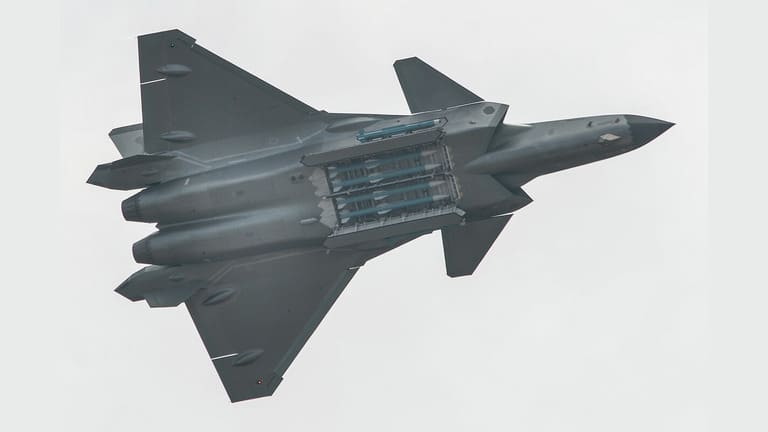
For years, hypersonic missiles have been considered among the most expensive weapons in development, largely because of the rare and costly materials needed to withstand extreme heat. Now, Chinese researchers say they have found a way to use ordinary stainless steel—a material found in everything from kitchen sinks to skyscrapers—in the nose cone of a hypersonic missile.
He thought he was rescuing a sheep—but it turned out to be something else
This bizarre French customer habit is driving shop owners crazy
If true, this would be a remarkable achievement. At speeds of Mach 8, temperatures on a missile can soar above 3,000°C. Stainless steel, however, begins to warp at just 1,200°C, making it long thought unfit for such use. Yet a team led by Professor Huang Fenglei at Beijing’s Institute of Technology claims to have solved the problem with a novel thermal protection system.
Beating the limits of steel
The solution relies on layering. The outer shell of the missile is stainless steel, but on top of it sits an ultra-high temperature ceramic coating, designed to take the brunt of the heat. Beneath that lies a 5 mm layer of aerogel, a lightweight insulator famous for its ability to withstand extreme conditions while being almost feather-light. Together, these barriers reportedly allow the steel structure to survive temperatures once thought impossible for the material.
The payoff could be enormous. Stainless steel is far cheaper and more widely available than tungsten alloys, the current favourite for hypersonic applications thanks to their melting point of 3,422°C. But tungsten is rare, heavy, and expensive—even though China controls about 85% of global tungsten production. By turning to steel, the People’s Liberation Army could drastically reduce costs and simplify production.
Strategic and military implications
The claims, reported by the South China Morning Post, suggest that China may be closing another gap in the global hypersonic arms race. Hypersonic weapons are prized because they can travel at extreme speeds while manoeuvring, making them far harder to detect and intercept. If China has indeed developed a way to mass-produce them using cheaper materials, it could put rivals such as the United States and Russia under pressure to accelerate their own research.
Professor Huang is no outsider. He is reportedly a senior defence scientist, acting as deputy director of research for a classified military programme, a technical adviser to the Central Military Commission, and deputy head of a unit within China’s Equipment Development Department. His work highlights just how deeply integrated these technological breakthroughs are with China’s national defence strategy.
A new chapter in the hypersonic race
The idea that stainless steel, a material so mundane we associate it with cutlery, could play a role in cutting-edge missile technology is striking. But it also underscores the ingenuity—and the urgency—driving military innovation.
If verified, this breakthrough could lower the cost of hypersonic weapons dramatically, making them more accessible and more widely deployed. For the rest of the world, the development adds yet another layer of complexity to an already high-stakes race where physics, politics and power are colliding at supersonic speed.
Similar Posts
- China’s new engine could circle the globe in just 2 hours—20,000 km/h breakthrough
- Stop Food from Sticking to Stainless Steel Pans with This Simple Trick!
- Top Chef Philippe Etchebest Warns Against This Trendy Cooking Tool!
- China builds fake American warships in desert—satellite images raise questions
- China unveils massive military project : satellite images show construction of the largest military hub on Earth spanning over 1 000 acres

Felix Marlowe manages Belles and Gals’ vibrant social media platforms. With expertise in social engagement and viral marketing, Felix creates content that sparks conversation and keeps followers coming back for more. From celebrity news to trending challenges, Felix makes sure our social media stays at the forefront of pop culture.


