
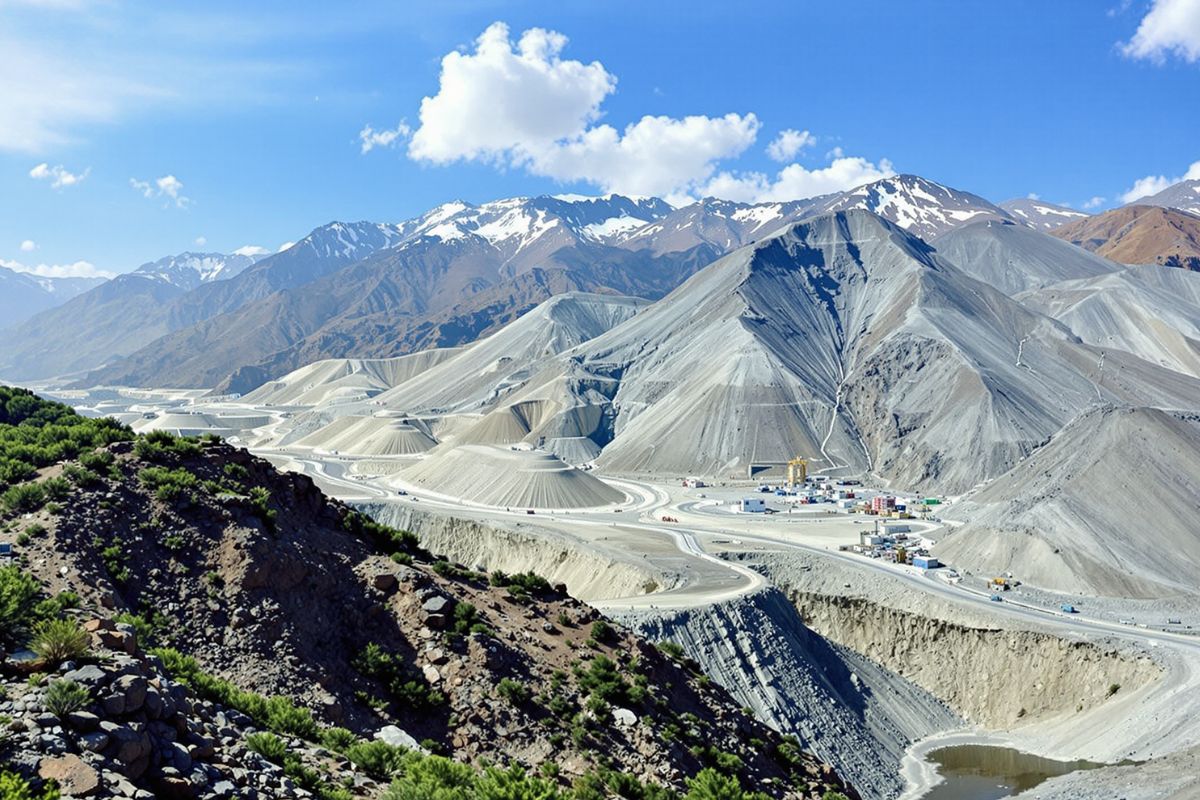
China has added another jewel to its crown of mineral wealth. Hot on the heels of a record lithium discovery in Tibet, geologists have announced the unearthing of a massive rare earth deposit in Honghe, Yunnan province. According to the China Geological Survey (CGS), the site could hold over 470,000 tonnes of highly sought-after minerals—an amount valued at more than €216 billion.
He thought he was rescuing a sheep—but it turned out to be something else
This bizarre French customer habit is driving shop owners crazy
This discovery isn’t just another mine; it’s a strategic asset. Rare earths like neodymium, praseodymium, dysprosium and terbium are indispensable for advanced technologies, from smartphones and electric vehicles to wind turbines and military equipment. In other words, this single find could help shape the global balance of power in industries that define the future.
Why this deposit matters
Rare earth deposits aren’t created equal. The Honghe site is what’s known as an ion-adsorption deposit, a type first identified in China back in 1969. These ores are concentrated in clay-rich soils, which makes them comparatively easier—and cleaner—to extract. Unlike deep mining that scars landscapes, ion-exchange methods can release these minerals with less environmental damage.
For China, already sitting on around 70% of global reserves, this discovery consolidates its grip on a market where demand keeps soaring. The CGS says the new mine could significantly strengthen the entire supply chain, giving Beijing an even firmer hand in a sector where it already dominates.
Counting the treasure
Putting a price on the discovery is tricky, given the volatility of rare earth markets. But using conservative averages—about $500 per kilogram of oxide across the four key elements—experts estimate the Honghe mine’s contents could be worth roughly $235 billion (around €216 billion).
That’s before factoring in the costs of extraction, processing, and the inevitable market shifts once such a huge supply enters circulation. Flooding the market with new supply could drive prices down, but for now, the sheer scale of the find is enough to send ripples through global markets.
Strategic weight on the global stage
Beyond the numbers, this is a geopolitical story. Rare earths are the quiet power behind the green energy transition—vital for electric cars, wind turbines, solar panels and next-generation batteries. They’re also crucial for military technology, from fighter jets to missile guidance systems.
With this latest discovery, China not only cements its status as the world’s rare earth superpower, but also raises fresh concerns for nations already scrambling to secure their own supplies. The U.S., Europe and Japan have all been racing to diversify supply chains, fearing overreliance on a single source.
A golden year for China’s resources
The Honghe find caps what has already been a bumper year for Chinese geology. In 2024 alone, the country has announced the identification of two new minerals at Bayan Obo—already the world’s largest rare earth mine—plus a major gold discovery in Hunan province.
Together, these discoveries underscore a simple reality: in the race for resources that will power the green economy and advanced technologies, China continues to set the pace. For the rest of the world, the question is how to keep up.
Similar Posts
- UK officials alarmed by China’s plans for a massive new embassy in London
- China’s new engine could circle the globe in just 2 hours—20,000 km/h breakthrough
- China unveils massive military project : satellite images show construction of the largest military hub on Earth spanning over 1 000 acres
- How Nvidia’s H20 chip became the new battleground in the AI race with China
- Why Shein might bring its production back to China to please Beijing

Felix Marlowe manages Belles and Gals’ vibrant social media platforms. With expertise in social engagement and viral marketing, Felix creates content that sparks conversation and keeps followers coming back for more. From celebrity news to trending challenges, Felix makes sure our social media stays at the forefront of pop culture.


