
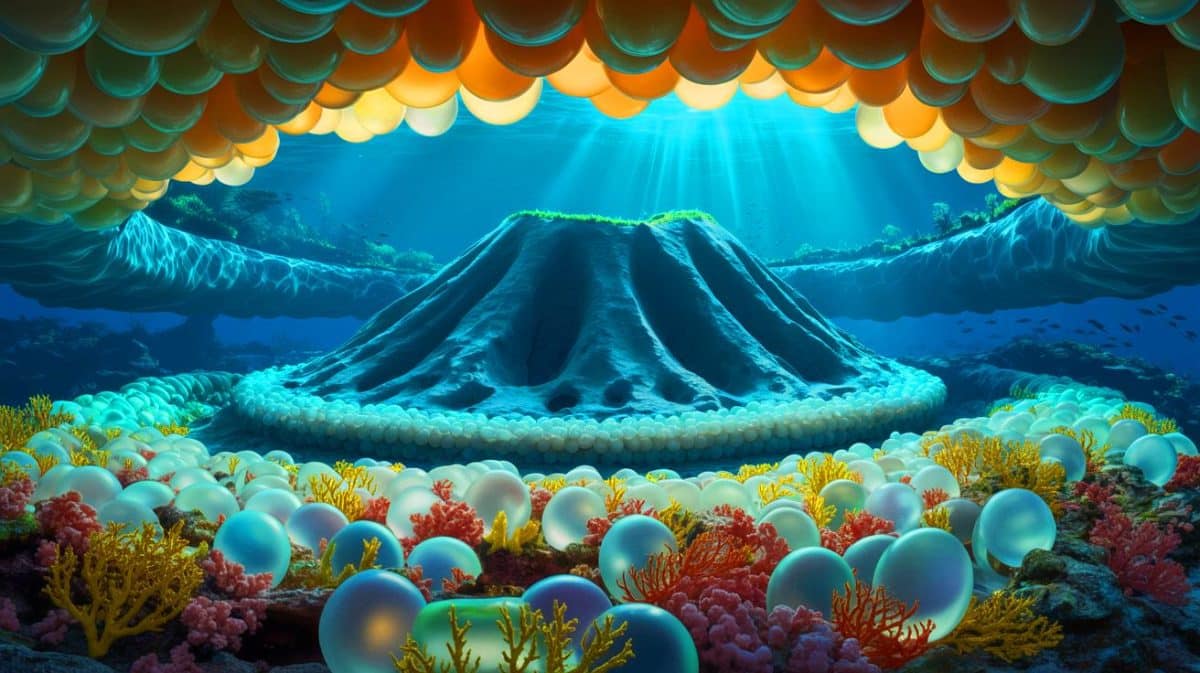
What began as a simple deep-sea survey has turned into one of the most astonishing marine discoveries in recent memory. Beneath the Pacific Ocean, off the coast of Vancouver Island, scientists stumbled upon an underwater volcano that isn’t just active—it’s serving as a massive nursery for over a million giant eggs. The find has left experts rethinking what they thought they knew about life in the deep sea.
He thought he was rescuing a sheep—but it turned out to be something else
This bizarre French customer habit is driving shop owners crazy
A Volcano That Was Supposed to Be Dead
Back in 2019, researchers from Fisheries and Oceans Canada set out to study a towering seamount, rising more than 3,600 feet from the ocean floor. Initially classified as extinct, the volcano surprised the team by venting mineral-rich, hot water—a sure sign it was still alive. This unexpected warmth had already nurtured colonies of deep-sea corals and sponges. But the real shock came when cameras revealed hundreds of white skate rays laying their eggs directly on the volcano’s summit, nearly a mile below the surface.
The Largest Egg Deposit Ever Recorded
While white skate rays are known to scientists, the scale of this event is unprecedented. Early counts suggest hundreds of thousands—possibly over a million—egg cases scattered across the volcanic terrain. Each one is enormous, nearly 20 inches long, shaped like a curved, leathery pouch. Producing such large eggs is a costly strategy for the mother, but it ensures each embryo is packed with nutrients to survive in the harsh, slow-moving deep-sea environment.
Volcanic Heat: Nature’s Perfect Incubator
In the frigid darkness of the deep ocean, development is painfully slow. Marine biologist Cherisse Du Preez explains that white skate embryos can take up to four years to hatch in normal conditions. But here, the volcanic heat likely speeds up the process dramatically, giving the hatchlings a better shot at survival. The summit’s slightly shallower depth also offers more protection from predators before the young rays venture into the open deep.
A Rare Glimpse Into Evolution at Work
This volcano is more than a geological wonder—it’s a living laboratory for studying how life adapts to extreme conditions. Similar to the hydrothermal vents near the Galápagos, this site proves that even the most hostile environments can foster complex ecosystems. The strategy of laying eggs in a volcanically heated nursery may have been happening for centuries, hidden from human eyes until now.
Why This Discovery Matters
As breathtaking as this is, it’s also fragile. Deep-sea ecosystems are under growing threat from climate change and deep-sea mining. Scientists warn that places like this must be protected, not just for the sake of the species that live there, but because they may hold clues to understanding life’s resilience on Earth—and possibly even beyond it.
In the words of one researcher on the expedition, “The deep ocean still holds secrets we can’t even imagine. This discovery is just the beginning.”
Similar Posts
- Incredible footage captures three orcas hunting and feasting on a great white shark in South African waters
- Scientists Discover a Massive Ocean 700km Below Earth’s Surface
- Massive Rift in Africa Signals the Birth of a New Ocean Sooner Than Expected
- Rare footage shows orcas taking down a great white shark off South Africa
- Breathtaking video shows three orcas hunt and feast on a great white shark in South Africa

Felix Marlowe manages Belles and Gals’ vibrant social media platforms. With expertise in social engagement and viral marketing, Felix creates content that sparks conversation and keeps followers coming back for more. From celebrity news to trending challenges, Felix makes sure our social media stays at the forefront of pop culture.


