
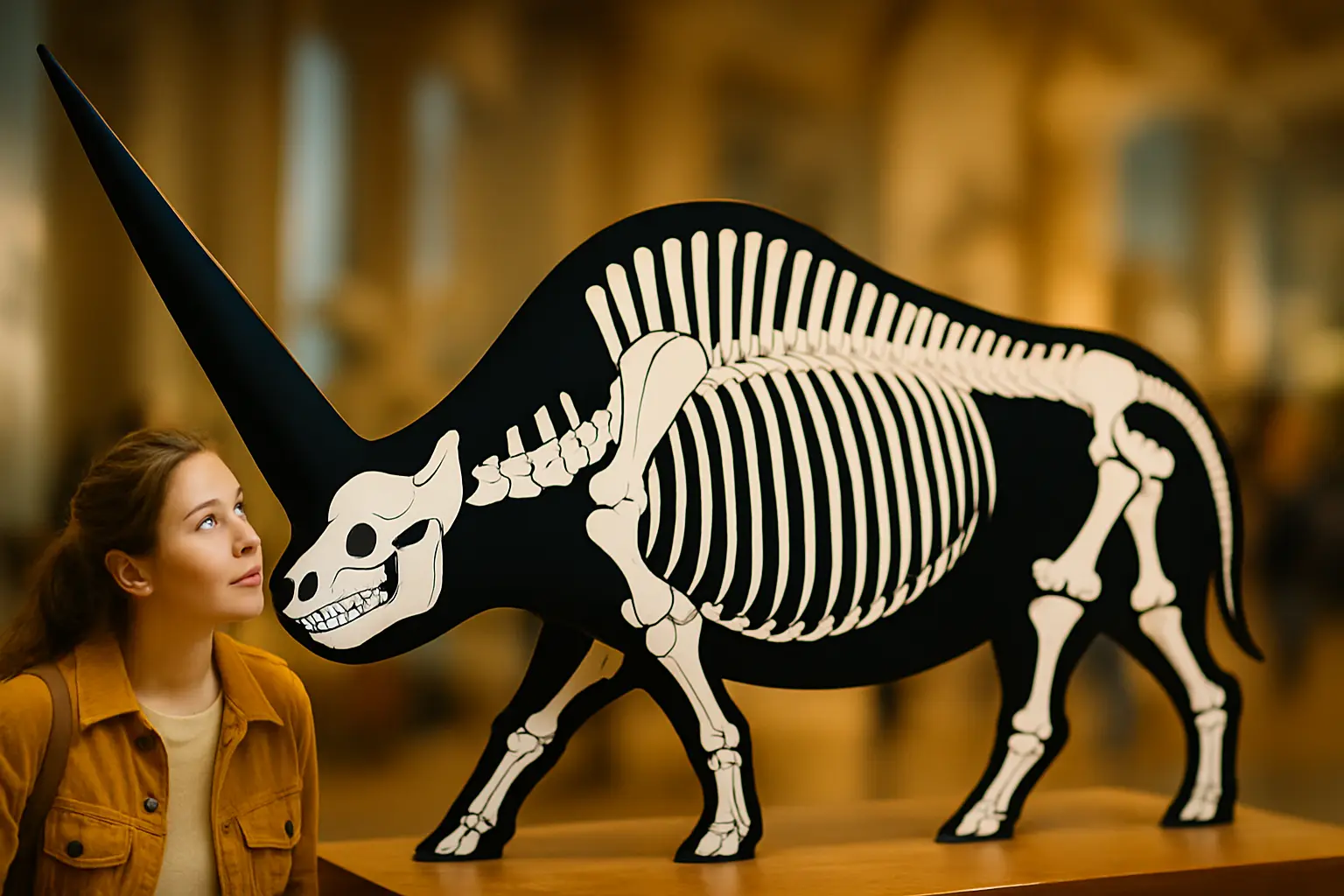
The Real Unicorns: When Science Outpaces Myth
Unicorns. They’re everywhere. They gallop through children’s stories, prance on toy shop shelves, and stubbornly refuse to leave mugs, t-shirts, or even beachwear. Unicorns have become more than just fantastical creatures; they’re social metaphors, looming large in the worlds of dating (“I’m looking for a unicorn!”) and tech finance (think billion-dollar “unicorn startups”). It’s safe to say: unicorns have infiltrated our daily lives with the subtlety of a glitter cannon at a yoga class.
He thought he was rescuing a sheep—but it turned out to be something else
This bizarre French customer habit is driving shop owners crazy
Yet, up until recently, unicorns were considered nothing more than a fairy tale we desperately wished were real—a sparkly invention, almost impossible to imagine sharing the human world. These creatures were so imbued with fantasy that their very mention summoned rainbows and sprinkles to mind. The stuff of pure fiction, right?
Enter Elasmotherium: The Not-So-Magical Siberian Unicorn
Wrong! Thanks to relentless scientists, we’ve discovered unicorns not only existed, but may have crossed paths with our distant ancestors. Meet Elasmotherium sibiricum, the so-called Siberian unicorn. Before you reach for a dye kit and a rainbow, let’s clarify: this animal belonged to the rhinoceros family. Picture a large rhino with a single, prominent horn perched atop its skull—not quite the dainty unicorn from bedtime stories, but impressive in its own right.
This Siberian unicorn didn’t just outsize the legends; it outscaled modern rhinos by about double, tipping the scales at a staggering 4 to 5 tonnes. Traces of this hefty herbivore have been located across Kazakhstan, southeastern Russia, Siberia, and Ukraine. If you’re wondering just how far its horn could be seen on the prehistoric steppes, you’re not alone.
Unicorns and Early Humans: Contemporary Neighbours
Up until recently, the scientific consensus—echoed in publications like Discover Magazine—was that Elasmotherium sibiricum disappeared some 350,000 years ago. But that assertion has been upended by new radiocarbon dating performed on 23 distinct fossils, which shifts their extinction to a much more recent window: just 35,000 years ago.
Now, why does this matter? The Neanderthal—a close human cousin—emerged around 300,000 years ago. Doing the math, that means some of our ancient relatives were contemporaries with these last Siberian unicorns. Imagine the campfire stories!
The cause of the Siberian unicorn’s extinction is still a bit of a mystery. Was it early humans, perhaps hunting these massive creatures until they vanished from the steppes? Possibly. However, the leading suspect isn’t a spear-happy ancestor but climate change. It’s likely that particularly harsh winters robbed the majestic beasts of their only food source—grass.
- The Siberian unicorn weighed two times as much as today’s rhino (about 4–5 tonnes).
- It roamed Kazakhstan, Siberia, southeastern Russia, and Ukraine.
- Radiocarbon dating shows extinction occurred about 35,000 years ago.
- Humans may have been contemporaries, but climate change likely played a major role in their disappearance.
Extinction or Just a Passing of the Torch?
Should we really say the Siberian unicorn “went extinct”? In one sense, yes. But it’s perhaps more accurate to describe it as a “pseudo-extinction.” The Siberian unicorn departed, but left behind a successor: the rhinoceros species we know today. Genetically, these two branches went their separate ways between 43 and 47 million years ago—but they share an ancient family tree.
Sadly, today’s rhinos might someday follow their unicorn cousins onto the list of vanished species. Four out of the five current rhino species are considered threatened. So, before you dismiss the legend, spare a thought for the real unicorns we once had, and the ones—if we’re not careful—who may vanish next.
In the end, it seems unicorns are more than just a sparkly myth; their history is a reminder that our planet has always been full of unexpected marvels. Cherish the wild—mythical or not—while you can.
Similar Posts
- If Humans Disappeared, This Is the Species Scientists Say Would Dominate the Earth
- If Humans Vanished, Scientists Say This Species Would Likely Take Over the Earth
- Six Enormous and Rare Giant Catfish Appear in Cambodia’s Waters
- Wildlife photographer wakes up from a nap with a cheetah sleeping next to him
- Discovery of a giant snake sparks questions: could it be the biggest ever?

Felix Marlowe manages Belles and Gals’ vibrant social media platforms. With expertise in social engagement and viral marketing, Felix creates content that sparks conversation and keeps followers coming back for more. From celebrity news to trending challenges, Felix makes sure our social media stays at the forefront of pop culture.


