
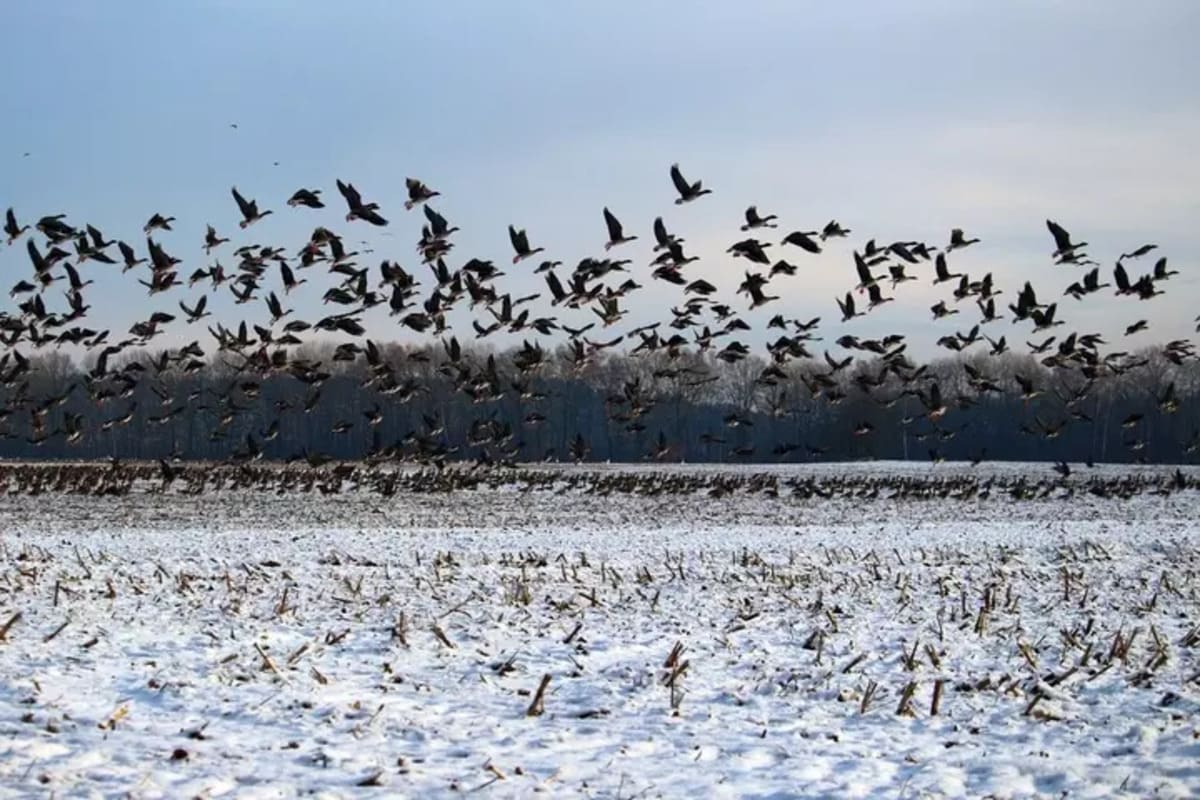
Every year, when the cold sets in and the days shorten, millions of birds embark on a journey that defies human comprehension. These migratory marvels, often the size of a sparrow or a pigeon, will traverse thousands of miles, crossing mountains, oceans, and deserts with extraordinary precision and stamina. Today, thanks to cutting-edge technology, we are beginning to understand how these birds manage feats that seem more like science fiction than reality.
He thought he was rescuing a sheep—but it turned out to be something else
This bizarre French customer habit is driving shop owners crazy
The Incredible Feats of Migratory Birds
If you’ve ever watched an Olympic athlete break a record, you might have thought it was the peak of human achievement. But as it turns out, nature has athletes that far surpass our greatest feats. Take the Anadyr sandpiper, a small bird weighing just 250 grams (about half a pound). During its annual migration between Australia and Korea, this tiny bird flies non-stop for over 12,000 kilometers (7,500 miles), covering the equivalent of 126 marathons. This is just one of many awe-inspiring examples of migratory prowess.
Over the past few decades, scientists have made remarkable strides in understanding these extraordinary journeys. The combination of miniaturized tracking devices and geolocation technology has opened up a whole new world of discovery. What once seemed like unfathomable feats of endurance and navigation are now becoming clearer, thanks to a revolution in ornithology.

A New Era for Ornithology
Ornithologists like Scott Weidensaul, an environmental journalist and amateur ornithologist, often describe this as a “golden age” for the study of migratory birds. What was once speculation about their migratory patterns is now a detailed science, thanks to satellite tracking and advanced sensors that can track birds’ movements with incredible accuracy. For example, the Arctic Tern, which holds the record for the longest migration of any animal, travels an astounding 80,000 kilometers (49,000 miles) each year, and some individuals even exceed 90,000 kilometers (56,000 miles) on their round-trip journey from the Arctic to the Antarctic.
These technological advances have allowed researchers to not only measure these distances but also track the connectivity between different stages of the birds’ annual cycles. Understanding how these migratory species are connected across vast distances has given us a clearer picture of their extraordinary navigational skills and how they accomplish their epic travels.
Extraordinary Physical Abilities
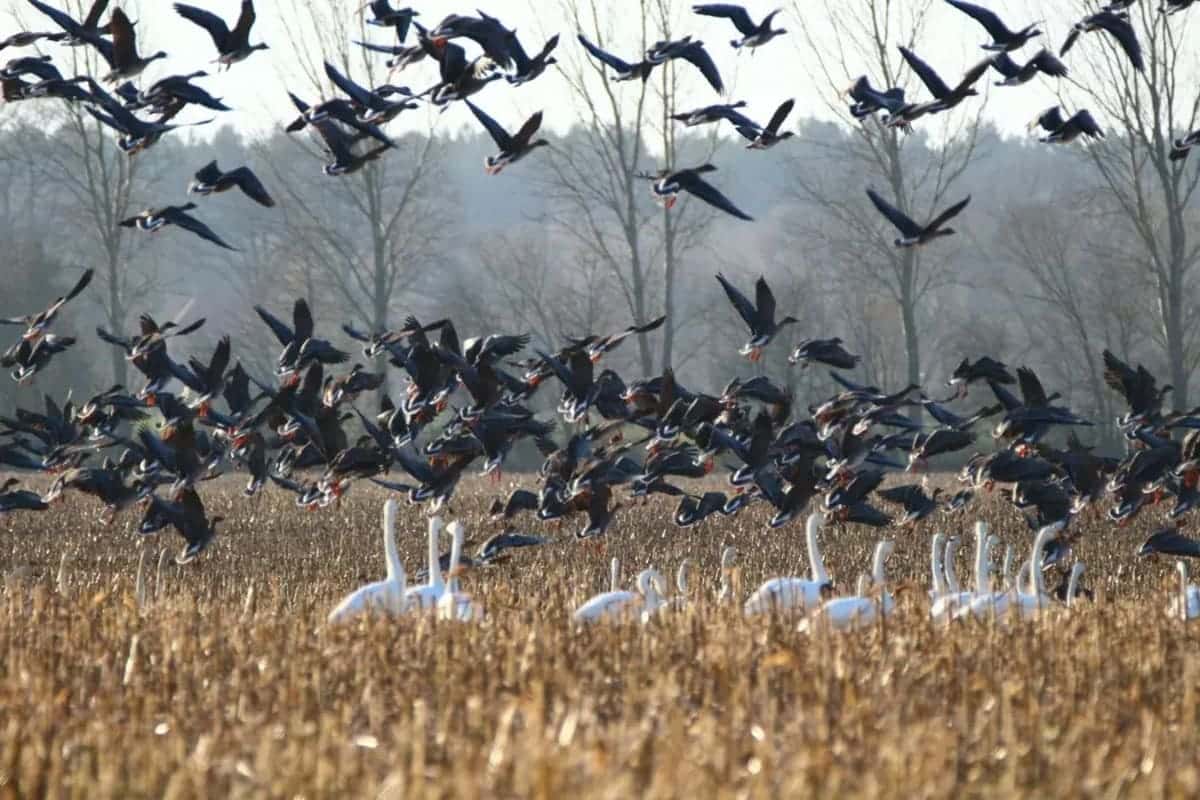
The true wonder of these birds lies not only in the distances they cover but in their incredible physiological adaptations. To reach altitudes of 7,200 meters (23,600 feet) and fly over the Himalayas, bar-headed geese have developed a unique respiratory system that allows them to extract oxygen from the thin air at high altitudes. Meanwhile, bar-tailed godwits preparing for a 7- to 9-day non-stop flight from Alaska to New Zealand accumulate up to 17 times more fat than their usual reserves, burning it more efficiently than humans—without the risk of dehydration.
Some birds even shrink their internal organs—like the digestive and reproductive systems—to reduce weight for long flights, a phenomenon that once seemed impossible. They’re literally shedding parts of themselves to travel farther, and yet, this extreme adaptation doesn’t harm them long term. These physiological feats are a testament to nature’s ingenious ways of supporting these birds in their demanding journeys.
Moreover, many migratory birds possess a magnetic compass embedded in their eyes, allowing them to navigate by the Earth’s magnetic field. This fascinating ability is just one of the many secrets that scientists have uncovered in recent decades, further illustrating the remarkable resilience of these creatures.
The Fragility of Migratory Birds
But as incredible as their abilities are, migratory birds are not invincible. In fact, their migratory connectivity makes them particularly vulnerable to environmental changes and human intervention. Scott Weidensaul emphasizes that these birds are not residents of a single place—they are citizens of the planet. To truly protect them, we need to understand their entire lifecycle and how each step of their journey is interconnected.
For example, what happens to them during the winter months can have lasting effects on their entire migration. In the 1990s, California ornithologists discovered that Swainson’s hawks—which winter in Argentina—saw their population decline dramatically. Upon investigation, they found that agricultural practices in Argentina, specifically the widespread use of pesticides in monoculture crops, had destroyed the birds’ winter habitat. However, after the Argentine government banned certain pesticides, the hawk population began to recover.
The Climate Crisis: A Growing Threat
Unfortunately, migratory birds are also some of the first victims of climate change. In western Europe, for instance, the population of black flycatchers, which migrate from West Africa, has been in freefall. These birds depend on a specific window of insect abundance to feed their young, but as climate change causes insects to emerge earlier in the year, many hatchlings are left without enough food, leading to fewer surviving juveniles.
In some areas, entire wintering grounds are threatened by rising sea levels. The Kirtland’s warbler, a rare species that was saved from extinction in the 20th century through dedicated conservation efforts, nests on islands in the Bahamas that are only a few meters above sea level. As these islands are increasingly at risk from climate change, so too is the future of this precious bird.
A Glimmer of Hope
Despite these challenges, there is some hope. Over the past few years, positive steps have been taken to protect migratory birds. For example, when coastal development in the Yellow Sea between China and Korea threatened the critical stopover points for millions of migratory birds, the Chinese government took action and restricted coastal development. The results were immediately visible, with bird populations benefiting from the improved habitat.
Similarly, in Nagaland, India, local communities have stopped the mass slaughter of Amur falcons, a species hunted for food and trade. With support from the government and international NGOs, the community has transformed their relationship with the falcons, turning them into an eco-tourism asset rather than a commodity.
In the U.S., migratory patterns are even shifting due to climate change. Hummingbirds, which once migrated from Alaska to the Amazon rainforest, are now staying in Pennsylvania for the winter instead. These birds—once unable to survive the colder temperatures—are now pioneering a new migration route, passing on their genes to future generations better suited to the changing climate.
These developments, though small in scale, offer hope for the future of migratory birds. But as Weidensaul notes, the biggest challenge remains: how we, as a global community, choose to share and protect the planet that these birds rely on for their incredible journeys.
To continue witnessing the awe-inspiring migrations of these avian athletes, it will take concerted global action to preserve their habitats and ensure their survival. In the end, the fate of migratory birds is tied to how we choose to care for the world we all share.
Similar Posts
- How many miles can a lost cat travel to find its owner?
- Is It Too Early to Feed Birds When the Cold Sets In ?
- Should You Start Feeding Birds as Soon as It Gets Cold?
- The World’s Oldest Wild Bird, Now 74, Just Laid an Egg in the Pacific
- Feeding Birds in Winter: Avoid These Common Mistakes

Felix Marlowe manages Belles and Gals’ vibrant social media platforms. With expertise in social engagement and viral marketing, Felix creates content that sparks conversation and keeps followers coming back for more. From celebrity news to trending challenges, Felix makes sure our social media stays at the forefront of pop culture.


