
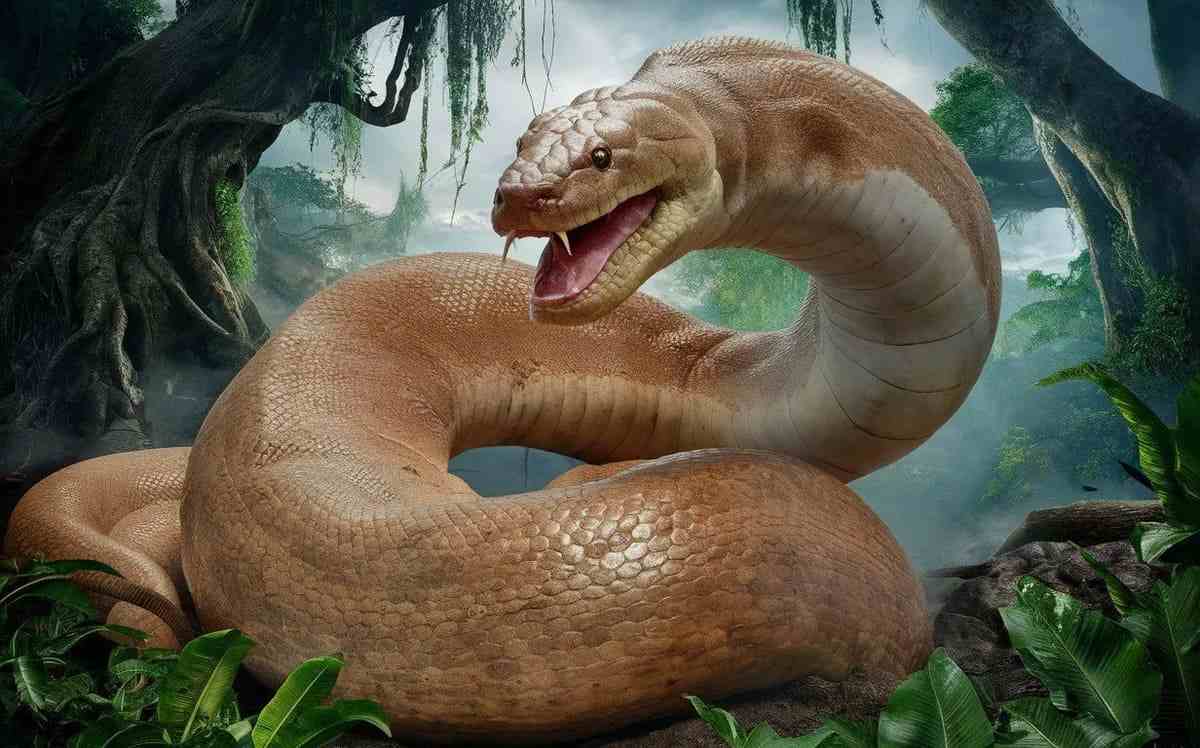
In a remarkable breakthrough that has captivated the scientific community, an extraordinary discovery in India has unveiled fossils of what might be the largest snake to ever roam the Earth. Known as Vasuki Indicus, this massive serpent lived millions of years ago, and its size has left paleontologists stunned. The implications of this find are profound, giving us a rare glimpse into the prehistoric world.
He thought he was rescuing a sheep—but it turned out to be something else
This bizarre French customer habit is driving shop owners crazy
Unearthing a prehistoric titan
A team of researchers in India has uncovered a striking set of fossils from what is believed to be the largest snake ever to exist. The discovery took place in the Panandhro lignite mine in Gujarat, an area already known for its rich deposits of ancient fossils. The team uncovered 27 vertebrae that once belonged to the enormous snake, Vasuki Indicus, which is thought to have lived around 47 million years ago during the Eocene epoch. This era was marked by a warmer climate and lush landscapes teeming with giant creatures.
What makes this find so extraordinary is the sheer size of the animal. These ancient bones hint at a creature that could have reached an astonishing length of 15 meters, making it a direct rival to the famously large Titanoboa—another prehistoric snake discovered in South America. This recent discovery has reignited the debate about the scale of ancient reptiles and their role in ecosystems that were vastly different from today’s world.
How big was vasuki indicus ?
By carefully studying the size of the vertebrae, scientists have estimated that the snake could have grown to lengths between 11 and 15 meters. To put that into perspective, that’s about the length of a school bus! The size estimation, though based on fossil evidence, suggests that this snake was one of the most formidable predators to have ever slithered across the Earth’s surface.
While such reconstructions always carry a degree of uncertainty, the fossilized remains paint a picture of a creature of truly colossal proportions. This discovery underscores the unique, larger-than-life creatures that once dominated the Earth during the Eocene epoch.
Anatomy and hunting techniques
Vasuki Indicus belongs to an extinct family of snakes known as Madtsoiidae. This group shares distant ancestry with today’s pythons and anacondas, both known for their muscular builds and constricting abilities. However, what sets Vasuki Indicus apart is its robust and cylindrical body, suggesting that it was more of a land-dwelling predator rather than an aquatic one like the modern anaconda.
Based on the attachment points of its ribs, paleontologists have speculated that this giant snake had a highly muscular body, giving it the ability to ambush and overpower its prey. Like modern-day constrictors, Vasuki Indicus would have likely used the strategy of lying in wait for its prey, then wrapping around it and squeezing tightly until it was immobilized.
A climate built for giants
The time period when Vasuki Indicus roamed the Earth was one of warm, humid conditions. The average temperature during the Eocene was around 28°C, creating an ideal environment for lush forests and a rich diversity of life. These warm, dense ecosystems supported not just the snake but a variety of other creatures, forming a complex web of life where massive predators like Vasuki Indicus could thrive.
In this climate, abundant prey would have been readily available, ensuring that this giant snake could feed and grow to such massive proportions. The conditions of the Eocene epoch—with its forested landscapes and warm temperatures—were perfect for fostering the development of giants like Vasuki Indicus.
Mysteries yet to be solved
Despite the groundbreaking nature of this discovery, much about Vasuki Indicus remains a mystery. Paleontologists are still in the process of analyzing its muscle structure, diet, and its specific role in the ecosystem of the time. Future studies, including chemical analyses of the fossils, may reveal further insights into the physiology of this prehistoric serpent, providing a more detailed understanding of how it survived in such a competitive environment.
As research continues, there’s hope that new findings will shed light on what this creature’s life was truly like. Was it the apex predator of its time? Did it interact with other prehistoric giants? These are just some of the questions that remain unanswered.
A window into prehistoric life
The discovery of Vasuki Indicus is not just a fascinating look at a single prehistoric creature—it is a window into a world long gone. It challenges our understanding of ancient predators and the astonishing adaptations that allowed creatures like this snake to exist.
As scientists continue to unravel the story behind this giant serpent, the discovery of Vasuki Indicus reminds us of the boundless potential for evolution and the incredible diversity of life that once called Earth home. It serves as a testament to nature’s ability to create truly extraordinary creatures, and the ongoing research promises to unlock even more secrets from the distant past. The legacy of this colossal serpent will undoubtedly continue to inspire curiosity and awe among both scientists and enthusiasts alike.
Similar Posts
- Scientists claim the discovery of the largest snake ever
- Discovery of a giant snake—the largest of all time?
- Discovery of a giant snake sparks questions: could it be the biggest ever?
- Discovery of a giant snake—could it be the largest one ever?
- Researchers Announce Discovery of the Biggest Snake Ever

Felix Marlowe manages Belles and Gals’ vibrant social media platforms. With expertise in social engagement and viral marketing, Felix creates content that sparks conversation and keeps followers coming back for more. From celebrity news to trending challenges, Felix makes sure our social media stays at the forefront of pop culture.


