

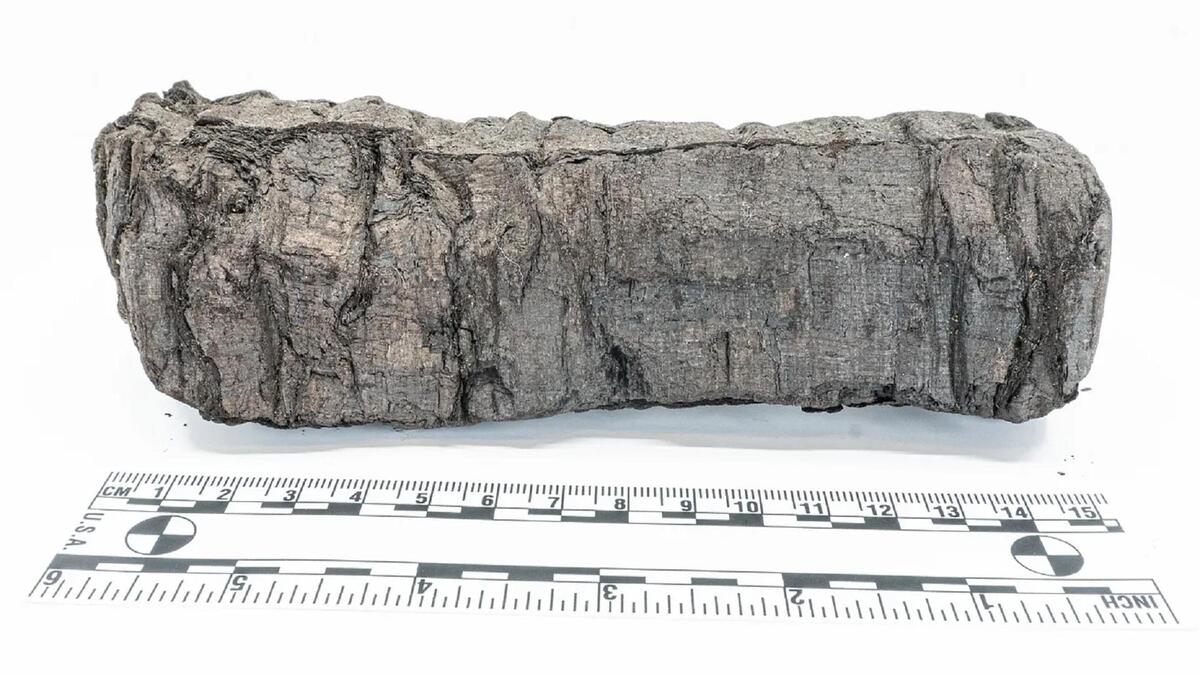
For centuries, the charred scrolls of Herculaneum were thought to be unreadable, their secrets forever lost beneath volcanic ash. Now, artificial intelligence has cracked one open—without physically unrolling it—revealing philosophy untouched for nearly 2,000 years.
He thought he was rescuing a sheep—but it turned out to be something else
This bizarre French customer habit is driving shop owners crazy
Unlocking a Silent Library
The scrolls were buried during the eruption of Mount Vesuvius in 79 AD, leaving them so fragile that even the lightest touch risked destroying them. For generations, scholars tried and failed to access their contents. But new advances in AI and high-resolution scanning have achieved what once seemed impossible.
As part of the Vesuvius Challenge, researchers reconstructed text from inside the blackened layers of a scroll, identifying it as the work of Philodemus, a Greek philosopher of the Epicurean school. The text, titled On Vices, reflects on ethics, pleasure, and human conduct—offering a glimpse into the intellectual world of Rome’s elite.
Breathing Life Into Ancient Philosophy
Philodemus was a disciple of Epicurean thought, which emphasized the pursuit of happiness through moderation and ethical living. His writings, found in the Villa of the Papyri, shaped debates among Roman aristocrats.
The decoded scroll, known as PHerc. 172, challenges long-held assumptions. Scholars once believed the first volume of On Vices was about flattery. Instead, the recovered passages reveal broader reflections on moral failings and their opposite virtues, adding depth to our understanding of his work.
According to experts at Oxford’s Bodleian Libraries, which safeguard many of these texts, this is the first time a scroll has been read in full without being unrolled—an achievement that could change the future of classical studies.
AI at the Heart of Discovery
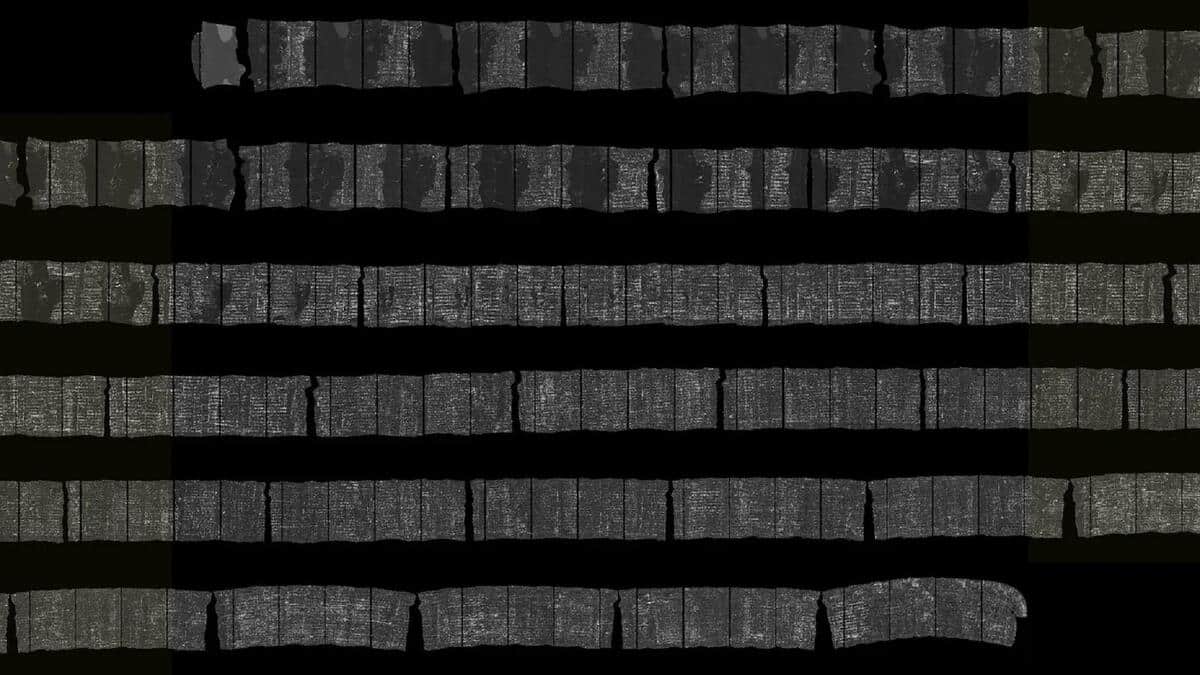
The process relies on a blend of 3D X-ray scans and machine learning algorithms trained to detect ink patterns hidden inside carbonized papyrus. The results are striking. In 2023, researchers first identified the Greek word “porphyras” (purple). Months later, they uncovered “diatrope” (disgust). Now, they’ve gone further—extracting full sections of coherent text.
As project leader Brent Seales described it, this is “the closest we’ve ever come to recovering a lost library.”
A Global Effort
The Vesuvius Challenge, launched in 2023, unites papyrologists, historians, and computer scientists worldwide. With thousands of unopened scrolls still waiting, the project’s goal is to recover as much lost knowledge as possible—without ever damaging the fragile artifacts.
These discoveries prove that collaboration between technology and the humanities can resurrect voices silenced for millennia. Each word uncovered is a bridge between past and present.
From Ash to Insight
The successful decoding of On Vices is more than a triumph of technology—it’s a cultural rebirth. It shows that even after two millennia of silence, human knowledge endures, waiting for the right tools to bring it back.
And as more scrolls are scanned, one can’t help but wonder: What other lost works—perhaps by Aristotle, Sappho, or Epicurus himself—still lie hidden, waiting for AI to reveal their secrets?
Similar Posts
- Ace the 2026 Philosophy Exam: Dates, Scoring Criteria & Essential Tips Revealed!
- Archaeologists Uncover Surprising Find in Hittite Tablets
- Unexpected Breakthrough Discovered While Analyzing Hittite Tablets
- The real reason archaeologists hesitate to open China’s first emperor’s tomb
- Celebs Hit the Beach: See This Week’s Hottest Birthday Bikini Snaps!

Felix Marlowe manages Belles and Gals’ vibrant social media platforms. With expertise in social engagement and viral marketing, Felix creates content that sparks conversation and keeps followers coming back for more. From celebrity news to trending challenges, Felix makes sure our social media stays at the forefront of pop culture.


Man, back in my day, wed have to read those scrolls the old-fashioned way. Now AIs doing all the hard work! Whats next, robots writing the next great Greek tragedy?
Dude, imagine if we could have AI decode my exs cryptic texts like that ancient Greek scroll! Maybe then Id finally understand what she meant by we need to talk without going through a mental labyrinth.
Man, AIs out there doing things I cant even wrap my head around! Deciphering ancient scrolls without even opening them? Thats some next-level stuff right there. Wonder what else theyll uncover next!
Man, AIs out there are straight-up blowing my mind! Deciphering ancient scrolls like its no big deal? Thats some sci-fi stuff right there. Can you imagine if they stumble upon a recipe for the best pizza ever next? I might start believing in AI magic!
I remember when deciphering ancient scrolls was all about dusty old scholars and magnifying glasses. Now AIs in on it, huh? Next thing you know, robots will be teaching philosophy classes too!
I always thought robots were just good for making toast or vacuuming, but decoding ancient scrolls? Thats some next-level stuff! Wonder what other secrets AI could uncover. Maybe my cats been hiding a treasure map in her litter box all this time!