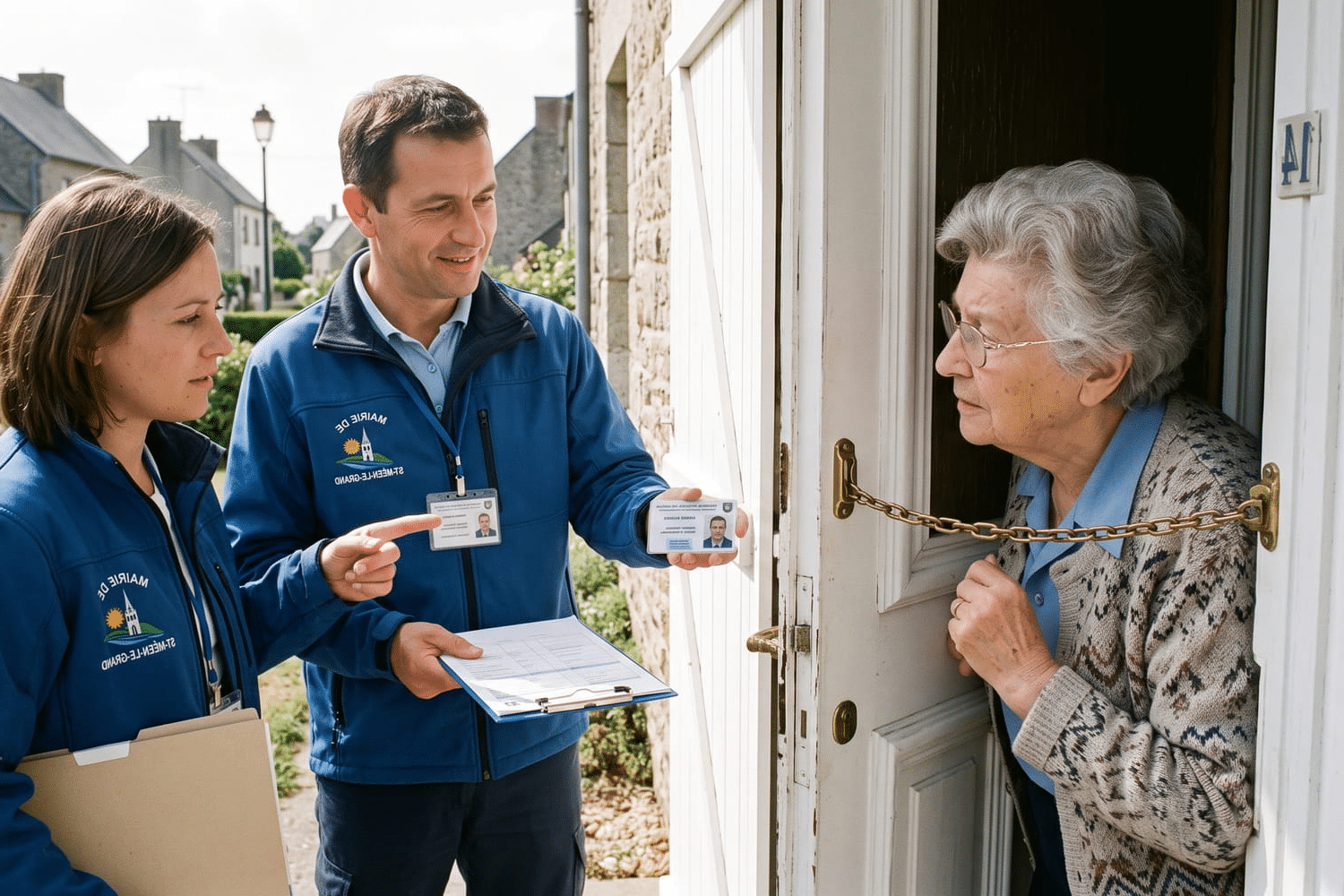
He thought he was rescuing a sheep—but it turned out to be something else
This bizarre French customer habit is driving shop owners crazy
Steiner-Waldorf, Montessori… Like other alternative educational methods, the Freinet approach aims to meet the needs of children, focusing on gradual learning, personal project enhancement, and collaborative work. Is this method suitable for your child? What does it advocate? Here are some insights.
Reimagining how to learn to read and write? This was the challenge taken on by educator Célestin Freinet, the creator of the pedagogy named after him. It all started in 1934 when he needed to teach his daughter Madeleine the basics of reading and writing. Instead of enforcing “traditional lessons” which were almost mechanical, the father allowed his daughter to experiment, sketch, and create small stories while encouraging her to look at printed texts; he called this self-directed learning. Gradually, Madeleine’s drawings became more detailed, she began to form letters and read short sentences. The teacher was convinced that by not imposing a set model and allowing for free discovery and experimentation, children are more naturally curious, express themselves freely, and thus more easily grasp spelling, reading, and arithmetic.
Freinet compiled these thoughts about child-centered learning into a book titled “Natural Method of Reading”, a learning approach based on experimental trial and error. Rather than merely reproducing, children need to observe, explore on their own, make mistakes, retry, imagine, deduce, and verify until they grasp the basics of learning. Nearly 80 years later, “Freinet pedagogy has evolved slightly, but the core principle remains the same: this method still positions the child as the main player and author of their education,” emphasizes Catherine Chabrun, a teacher and member of the Modern School Cooperative Institute – Freinet Pedagogy (ICEM). What are the differences from traditional education? Where can you find information on enrolling your child in a Freinet school? Find out below.
An Education Closest to the Child’s Needs
Similar to most alternative pedagogies (Montessori, Steiner-Waldorf…), Freinet is suitable for all children, primarily from kindergarten to elementary levels. Children are grouped in “cycle classes” of 20 to 30 students: combining grades like 1st/2nd, 2nd/3rd, or 4th/5th depending on the school. The Freinet classroom is not a traditional room where students sit and listen to a teacher’s lecture. There are highly individualized moments: each student can participate in various workshops (painting, geography, history, crafts…). For this, the classroom is organized into several small areas: a space for painting, a math corner, a writing table, a library… Thus, the teacher encourages children to freely form small work groups throughout the day. Children are supported and guided but can choose their activities based on their personal interests, known as free expression. They are not required to use specific materials or follow a particular model. “However, there are still guidelines and rules. Also, the natural drive of children ensures they actively seek knowledge and skills,” adds Catherine Chabrun.
Freinet School: What are the Differences?
- Like the pedagogy envisioned by Maria Montessori, Freinet schools advocate exploration, experimentation, and learning at one’s own pace. Teachers still follow the official national education curriculum, but they are free to decide the order in which they present their lessons: for example, they might teach geography for one week, then algebra, then natural sciences.
- The classroom is primarily a place of exchange where openness to others and embracing differences are addressed with as much kindness and cooperation as possible: discussions in the classroom consider the unique profiles and needs of children, including physical or moral differences and disabilities.
- “Every child’s voice is truly heard: each child participates in the life of the class“, the specialist notes. Rules of collective living and sanctions are decided by the children during a council that includes the entire class.
- Freinet pedagogy places a great emphasis on personal work and presentations: a child chooses a topic of interest (even if it’s not part of the official curriculum), engages in research, prepares a report, and presents it to the class. The presentation is then improved through group feedback, and the presenting student completes a self-correction form.
- The child is the protagonist of their evaluation. In Freinet pedagogy, students’ work isn’t graded. Instead, it’s annotated to highlight errors. Teachers prefer to sit next to the student to re-explain misunderstood concepts or suggest self-correction. Similarly, “repeating a grade isn’t favored; instead, extra time is given to a student who still can’t read at the end of the school year by grouping them with the next grade level, for example“, the expert explains.
- The Freinet approach includes a buffer zone between the playground and the classroom interior: about ten minutes at the start of the morning or afternoon are set aside for any student who wishes to speak out or share a feeling.
And After Elementary…
From the age of 11 or 12, children can move on to cooperative classes (secondary school classes within the public system that are heavily inspired by Freinet principles), directly attached to a regular middle school. They will follow the official middle school curriculum and take their exams at the end of 9th grade, then proceed to a conventional high school. “In France, there are officially 10 Freinet schools, but there are approximately 5,000 teachers who teach in a cooperative class within a regular school, strongly inspired by this pedagogy“, concludes the expert.
Interested in a Freinet school? Consult the ICEM: advisors will inform you about the nearest school to your location.
Similar Posts
- School Strike Alert: What’s the Plan for Parents? Essential Info Inside!
- “We were all gravely mistaken”: screens are indeed responsible for declining student performance, says the Swedish government
- School Insurance Secrets: What It Really Covers & Is It Mandatory?
- “I’m a Teacher, and These Are the Parent Phrases I Can’t Stand Anymore”
- Teacher’s Classroom Photo Ignites a Buzz Across Social Media Platforms

Felix Marlowe manages Belles and Gals’ vibrant social media platforms. With expertise in social engagement and viral marketing, Felix creates content that sparks conversation and keeps followers coming back for more. From celebrity news to trending challenges, Felix makes sure our social media stays at the forefront of pop culture.