
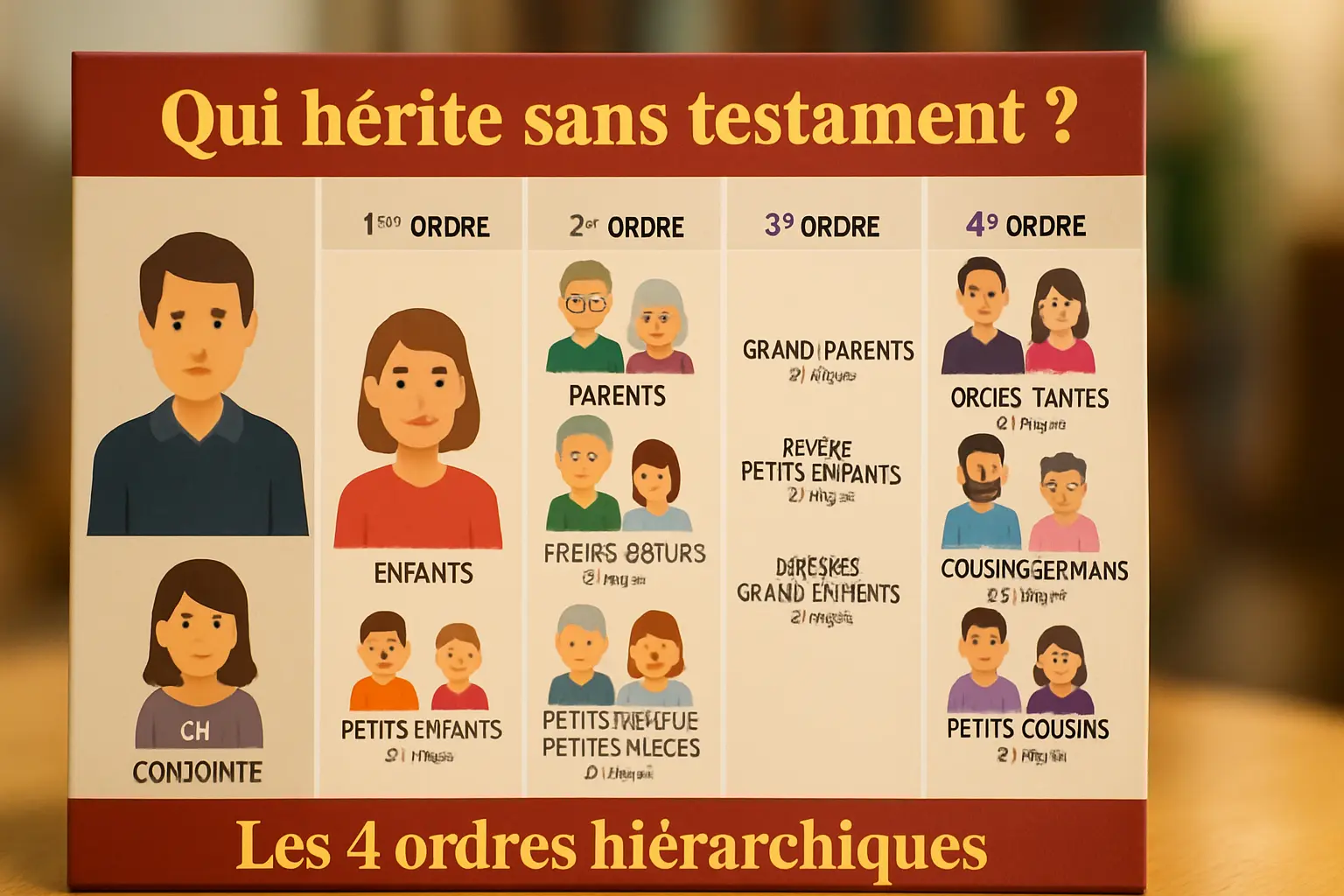
Who Inherits When There Is No Will? Here Is What the Law Decides
If you’re picturing family members circling an old wooden table, nervously fighting over a mysterious envelope meant to contain someone’s last wishes, well—sometimes, that scene never plays out. What happens when the deceased did not organize their succession and leaves no will behind? The answer: the law steps in, and sometimes it is less poetic than fiction.
He thought he was rescuing a sheep—but it turned out to be something else
This bizarre French customer habit is driving shop owners crazy
The Law Takes the Lead: Priority to Descendants
When a person dies without having structured their inheritance, their assets do not just drift away into the ether or end up with whoever finds the keys. Instead, the law carefully distributes the deceased’s property according to a well-defined order. In all cases, descendants have priority: children (and their own descendants) come first and, by law, exclude other members of the family from the distribution. Inheritance, at its core, is a family matter with a legal pecking order.
Married or Not: How Status Changes Succession
The marital status of the deceased can make a world of difference. If the deceased was married and hadn’t put their affairs in order, the legal system assigns the surviving spouse’s rights differently depending on the presence of descendants. In other words, if there are children or grandchildren, the surviving spouse’s share and legal standing will change compared to cases where none exist. No matter how romantic the wedding dance was, the law is precise and flexible in these matters.
And what about those who depart this world as unmarried individuals, leaving no instructions? In these situations, succession is governed as though the deceased was single. Again, the law organises the allocation of assets among the heirs, following a set ranking and determining each person’s share. It’s all business and clarity—if not necessarily warm and fuzzy.
Wills, Authentic Wills, and Those Rare Renunciations
Much is said about the importance of a will, even if it’s a document French people tend to draw up only rarely. Still, sometimes leaving a text expressing one’s last wishes is essential. There are formal requirements that must be followed for a will to be valid—it’s not just a matter of scribbling “Give everything to my cat” on a napkin and hoping for the best.
For those aiming for watertight last wishes, the rarely-used notarial will, also called the “authentic will,” can be valuable. It provides an extra layer of security for anyone who wants to ensure their decisions are unassailable after they’re gone.
On the topic of inheritance, most people accept what is offered to them—yet sometimes, heirs may choose to renounce their share of the succession. It’s a rare move, but it happens mainly to avoid inheriting the deceased’s debts, or occasionally, to benefit another heir. Practical information on how and why to renounce, as well as what this really means, is a must for anyone considering such a step. In short, it’s not a choice to make lightly.
Retirement Savings Plans and the Role of Notaries
Another detail to keep in mind: the retirement savings plan, well-known for its fiscal advantages when you pay in, also allows you to transmit assets to beneficiaries while benefiting from tax allowances. By the end of March, the tax authorities reiterated the rules for beneficiaries if the account holder dies before turning 70. No one likes to read the fine print, but in inheritance matters, it’s essential reading.
When it comes to donations and successions, keep in mind that the notary is entitled to proportional remuneration based on the amounts involved. There are specific scales that apply to main notarial acts in family law. Yes, sorting out inheritances can involve professional fees—which is why clarity is key at every step.
In summary, if there’s no will, the law doesn’t simply toss a coin. It’s a detailed process, with priority given to descendants, followed by careful consideration of marital status, and room for carefully-laid plans (or, on rare occasions, formal renunciations). The role of retirement savings plans, as well as the expertise (and fees) of notaries, also play their part. If you want your wishes to be truly respected—and maybe keep family dramas to a minimum—consider formalizing your intentions in writing. The law will always step in, but a solid plan in your own words may be just what your loved ones need.
Similar Posts
- Childless Inheritance Shocker: Notary Reveals True Costs Imposed by Law on Loved Ones
- Inherit a House Tax-Free: Discover the Top Strategy Used by Expert Notaries!
- 940,000 French Miss Out on Full Pension Benefits by Skipping This Step!
- Only People Born on These Dates Can Still Retire at 63!
- 92-Year-Old Retiree Loses Pension After Lifetime of Contributions!

Felix Marlowe manages Belles and Gals’ vibrant social media platforms. With expertise in social engagement and viral marketing, Felix creates content that sparks conversation and keeps followers coming back for more. From celebrity news to trending challenges, Felix makes sure our social media stays at the forefront of pop culture.


