
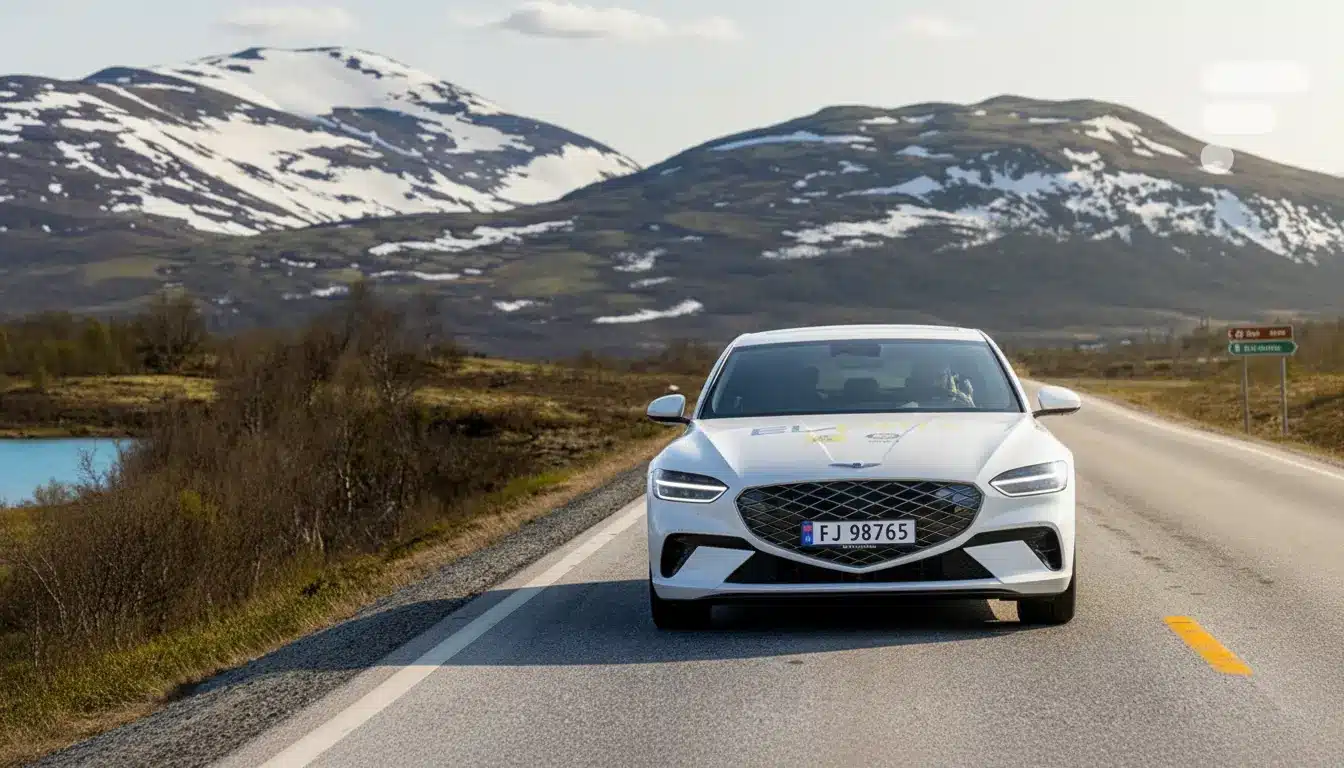
Think all electric car ranges are what they claim to be on paper? Think again! Recent tests on a series of EVs show that the real distance you’ll cover can be full of surprises—sometimes for better, sometimes for worse. Buckle up, because the numbers are in, and the gap between expectation and reality can be seriously electrifying.
He thought he was rescuing a sheep—but it turned out to be something else
This bizarre French customer habit is driving shop owners crazy
Range: Still the Dealbreaker for Many… But Should It Be?
Range anxiety hasn’t passed into the history books just yet. For many drivers, the question “how far can I really go?” still hangs heavy—sometimes acting as the ultimate barrier to buying an electric car. Yet, experts argue this is fundamentally missing the point. What’s truly crucial is the quality of the charging network, which, in France at least, is currently up to par. But regardless of actual needs, automakers know autonomy still sells, so they’re keen to tout their longest-distance models—think Lucid and Zeekr with their nearly 1,000-kilometer claims. Ford, for its part, seems to have understood that monstrous range might not always be relevant, but the marketing battle continues.
The WLTP and the Reality Check
But here comes the twist: what matters far more than any lab figure is actual, real-world range. WLTP certification is certainly a step up from the less accurate NEDC and its Chinese cousin, CLTC, but it still falls short of replicating real-life conditions. Why? Because range depends on so much more than the test cycle. Factors like how aggressively you drive, whether you’re pumping the AC, vehicle weight, and even the outside temperature all come into play. It’s not just about what’s on the badge—conditions matter.
- Lab results rarely translate perfectly to open-road exploits.
- Accessories, cold weather, or even that suitcase you packed for a weekend getaway can cut your range short.
Earlier this year, Norwegian site Motor.no put several EVs through their paces—first in sub-freezing conditions (down to -10°C), where Tesla’s Model S managed a chilly 530 km on one charge. Months later, with milder weather (think 15 to 20°C, prime for EVs), they re-ran the test. Their aim: to see how WLTP numbers compared to live results when the atmosphere warmed up a bit.
The Big Test: Numbers That Might Surprise You
The quirky thing? WLTP values logically should align with real-life performance in ideal conditions. In practice, differences of up to 13% less than what’s homologated cropped up. Among the standouts—just not in a good way—were the Toyota bZ4x (434 km on test, versus 503 km WLTP) and the BYD Atto 3 (364 km against a promised 420 km).
- Toyota bZ4x: 434 km achieved vs 503 km claimed
- BYD Atto 3: 364 km achieved vs 420 km claimed
However, some contenders exceeded expectations. The Tesla Model S Long Range, clocked at 634 km in WLTP, astonishingly managed 672 km on this test—a 6% positive swing. That said, a Norwegian oversight muddied the waters: with the wheels used, its actual WLTP should be 723 km, meaning it technically fell short of its theoretical peak.
- Tesla Model S Long Range: 634 km WLTP, 672 km tested (but actual WLTP with these wheels is 723 km)
The Nissan Ariya had a particularly impressive day: 580 km covered, compared to the manufacturer’s official 533 km—a quite rare reversal! Meanwhile, the Xpeng P7 ticked off 557 km, over-delivering on its 505-km WLTP rating. All cars were driven over an identical course, comprising about 365 km of highway and 120 km on regional roads, with more laps tacked on if charge remained. Average speeds topped out at 70 km/h—not true motorway conditions (which would average closer to 90 km/h, for example on Paris–Bordeaux routes), but more of a realistic daily mix.
- Nissan Ariya: 580 km achieved vs 533 km claimed
- Xpeng P7: 557 km achieved vs 505 km claimed
More vehicles joined the ranks of surprises: the MG4 and Tesla Model Y Propulsion both put in strong showings, as did the BMW i7, Mercedes EQE and EQS SUV, and the Hyundai Ioniq 6. Meanwhile, the “brand-new” BYD Atto 3 fell short, unable to match its theoretical range at all, reminding us auto hype might be just as fleeting as a full charge on a steep incline.
Conclusion: The Real Range Revolution
So, what can we draw from all this? For starters, never take an EV’s spec sheet as gospel, no matter how detailed. Real world beats the lab every single day. Test conditions, temperature, roads, and those stubbornly heavy shopping bags (or family members, no offense) will all leave their mark on your journey’s length. Good news, though: a robust charging network in places like France means EV anxiety might be more about myth than reality. Before you buy, check more than just the range on paper—check your real needs, and maybe leave just a little extra charge for surprise detours… or cooling the cabin down on those rare sunny days!
Similar Posts
- I drove a Tesla Model Y for a year and 30,000 kilometers—here’s how the costs compare to gas cars
- I Drove a Tesla Model Y for a Year and 30,000 Kilometers—Here’s How Much It Cost Compared to Gas Cars
- I drove a Tesla Model Y for a year and 30,000 kilometers: here’s how the costs stack up against gas cars
- After driving a Tesla Model Y for a year and 30,000 kilometers, here’s how the costs compare to a gas car
- 2,500 km EV Road Trip Proves Diesel Still Rules the Road

Felix Marlowe manages Belles and Gals’ vibrant social media platforms. With expertise in social engagement and viral marketing, Felix creates content that sparks conversation and keeps followers coming back for more. From celebrity news to trending challenges, Felix makes sure our social media stays at the forefront of pop culture.


