
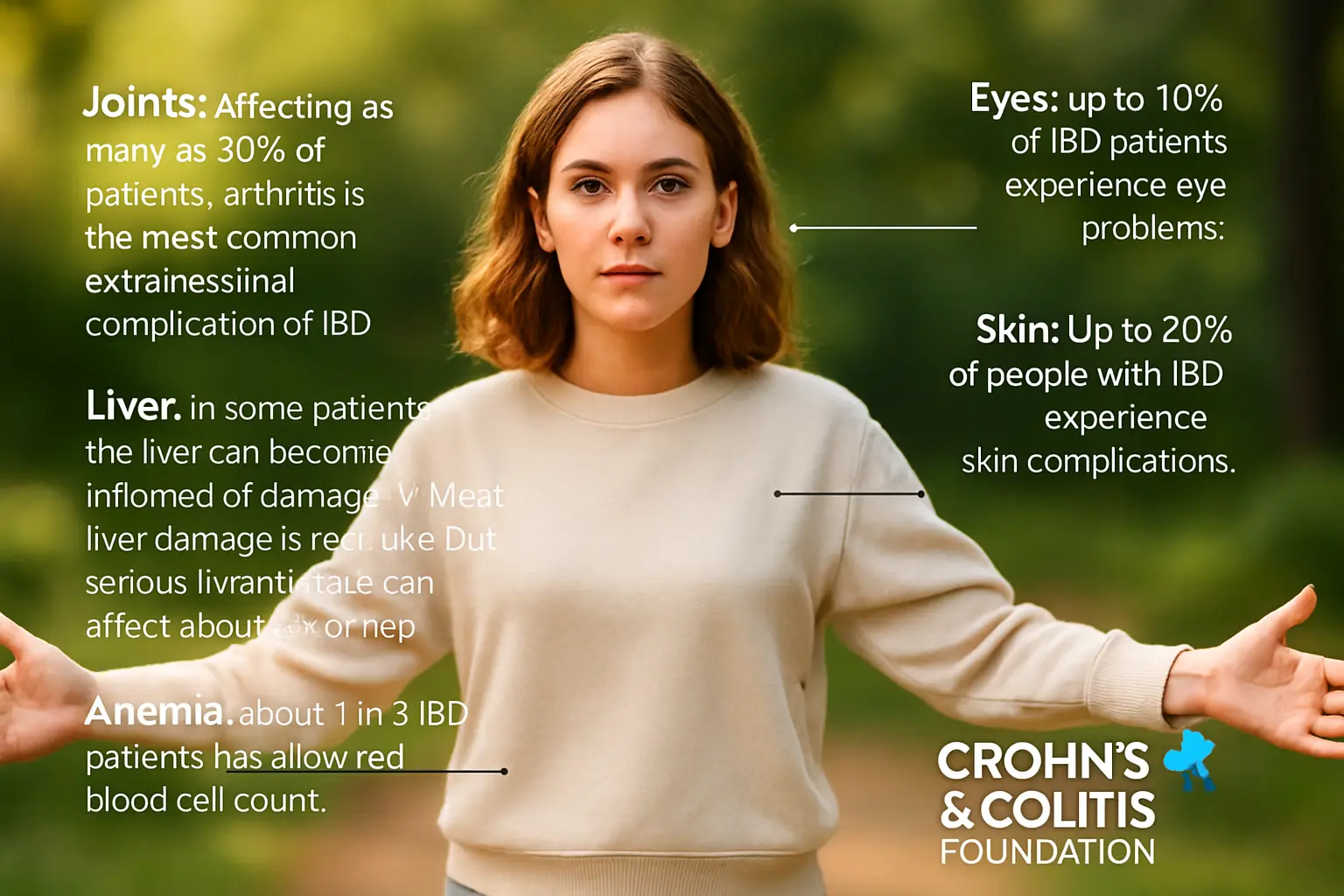
One in three Crohn’s patients suffer these joint, skin or eye symptoms too
Living with Crohn’s disease isn’t just about unpredictable trips to the bathroom or keeping a wary eye on what might upset your stomach next. For many, it sneaks beyond the gut, sometimes uninvited, and causes a whole host of issues that can be just as uncomfortable—and much harder to talk about at dinner parties. Let’s shine a light on these lesser-known sidekicks of Crohn’s, and how they impact people every single day.
He thought he was rescuing a sheep—but it turned out to be something else
This bizarre French customer habit is driving shop owners crazy
Unpacking Crohn’s Disease: Not Just a Digestive Dilemma
Crohn’s disease is a chronic inflammatory condition of the digestive system and, together with ulcerative colitis, forms part of the group known as IBDs—Inflammatory Bowel Diseases (or, if you’re practicing your French, “Maladies Inflammatoires Chroniques de l’Intestin”). Usually diagnosed between the ages of 15 and 35, Crohn’s doesn’t discriminate: kids and teens are increasingly affected, with national data showing the proportion among 13-19 year-olds has doubled. Experts still scratch their heads about the true origin, but the culprits probably include genetic, immune, and environmental factors… plus an unfortunate imbalance of the gut microbiota. (Yes, even your gut bugs might be to blame!)
At its core, Crohn’s involves an overactive immune system—specifically in the intestinal wall—causing inflammation that comes and goes in “flare-ups.” For some, symptoms are light. For others, the disease can be continuous and severe, making everyday life feel like an obstacle course. When things get that rough, hospitalization may be necessary. Diagnosis? That usually means enduring both an upper endoscopy and a colonoscopy (not anyone’s idea of a fun day), with CT scans, ultrasound, or MRI sometimes joining the party to confirm inflammation or locate those unwelcome ulcers.
Crohn’s sets itself apart from ulcerative colitis by its ambition: while ulcerative colitis sticks to the rectum and colon, Crohn’s can strike anywhere along the digestive tract—from mouth to anus. Most often, though, it camps out in the large intestine and the terminal ileum (the last leg of the small intestine).
Digestive Symptoms—and Serious Complications
Because of ongoing inflammation, Crohn’s can lead to a slew of nasty gut issues: ulcers, perforations, fistulas, abscesses, and stenoses (that’s a fancy word for inflammatory narrowing in the digestive tract). Symptoms peak during flare-ups and can be so intense that daily life grinds to a halt. The gut may be the main battlefield here, but, as many discover, Crohn’s isn’t content to stay in one lane.
When Crohn’s Marches Beyond the Gut: Joints, Skin, and Eyes
Crohn’s loves a plot twist: about one in three patients will, at some point, develop symptoms outside their intestines, sometimes causing as much trouble as their digestive woes. The most commonly affected areas? The joints, skin, and eyes.
- Joint issues: Rheumatological symptoms are common, and Crohn’s doesn’t play favorites. Elbows, wrists, knees, ankles, the sacroiliac joints, and even the spine can be affected, provoking pain in the neck or back. According to afa Crohn RCH France, this pain tends to strike in the second half of the night, leaving patients feeling stiff in the morning—so stiff, in fact, that it may take hours to loosen up. Sometimes, there’s also excess fluid in the joints (synovial effusion), which can make movement even more challenging.
- Skin troubles: Crohn’s can turn the skin into a battleground with erythema nodosum (those are tender red nodules), papules, macules, mouth ulcers, genital mucosal lesions, and something called pyoderma gangrenosum—painful ulcers, usually popping up on the legs. None of these are especially stylish accessories, and all can add further discomfort to daily living.
- Eye symptoms: In some cases, chronic inflammation reaches the eyes. This can mean pain, tearing, redness, sensitivity to light, or uveitis (a particularly annoying inflammation of part of the eye). The real kicker? Some patients notice no eye symptoms at all, just a gradual decline in vision. That’s why it’s absolutely crucial to see an ophthalmologist as soon as Crohn’s is diagnosed. Eye lesions most often appear during digestive flare-ups, so vigilance is key.
Navigating a Multisystem Challenge
Living with Crohn’s is rarely simple. While its digestive flare-ups may headline the show, the joint, skin, and eye symptoms can steal the spotlight, adding new layers of difficulty. If you or someone you know is facing a diagnosis, be alert to these extra-intestinal symptoms—and don’t hesitate to seek specialist care, whether it’s a rheumatologist for aching joints, a dermatologist for skin lesions, or an eye specialist if anything seems off. Sometimes, the small things (like an achy wrist or red eye) can be signs your body wants a little extra attention.
In the end, Crohn’s is a complex companion. Managing it means taking care not just of what’s inside your gut, but what’s happening everywhere else too. After all, the road to feeling better is a team effort—between you, your doctors, and maybe a sense of humor to help with those tough mornings.
Similar Posts
- The two most excruciating types of physical pain, according to scientists
- Fibromyalgia symptoms explained: chronic pain, fatigue and impact on daily life
- The Best Anti-Inflammatory Drink for Arthritis Relief
- Pussycat Dolls Star Bedridden with Severe Health Crisis After COVID Vaccine
- The tomato-cucumber combo: why this salad staple might not be so healthy?

Felix Marlowe manages Belles and Gals’ vibrant social media platforms. With expertise in social engagement and viral marketing, Felix creates content that sparks conversation and keeps followers coming back for more. From celebrity news to trending challenges, Felix makes sure our social media stays at the forefront of pop culture.


